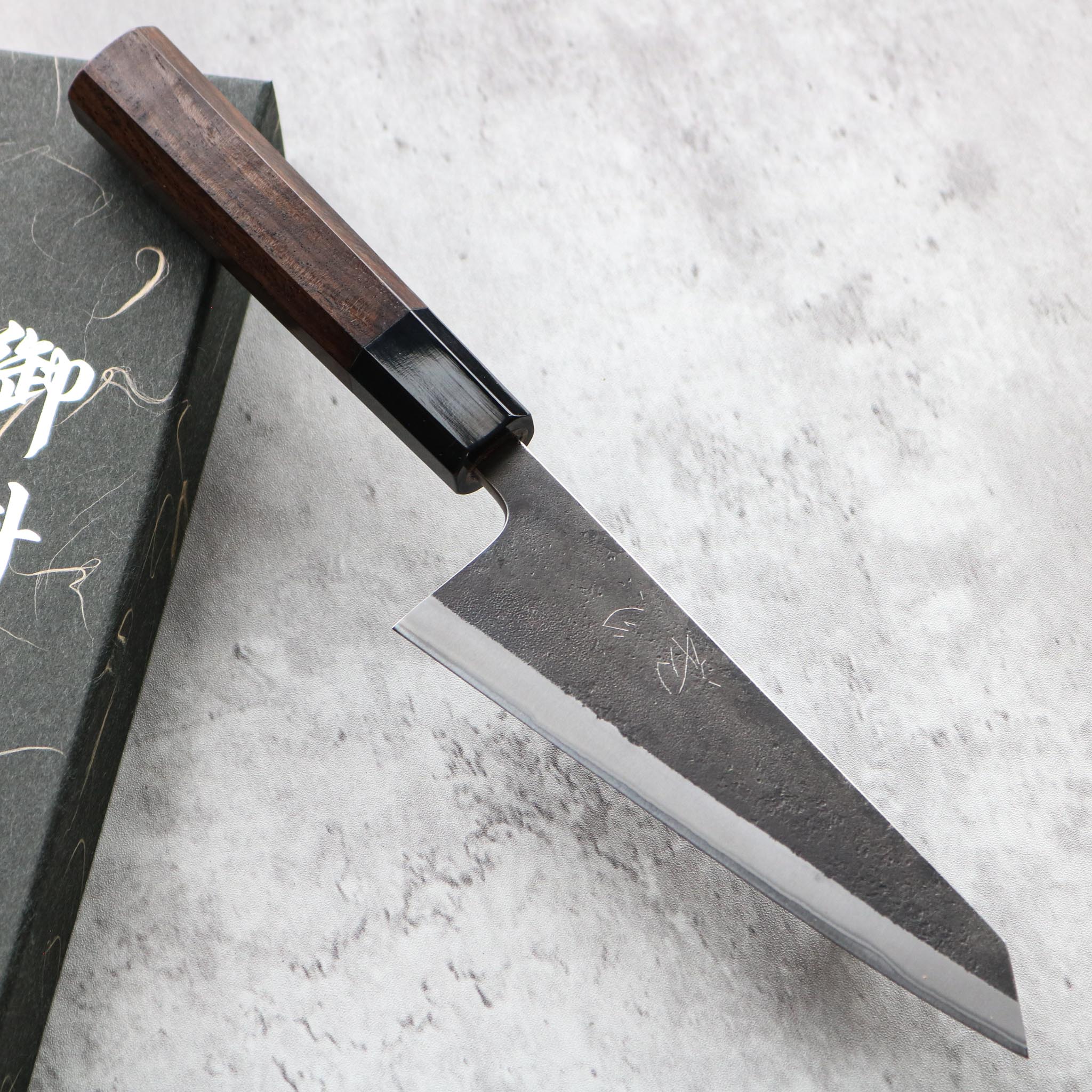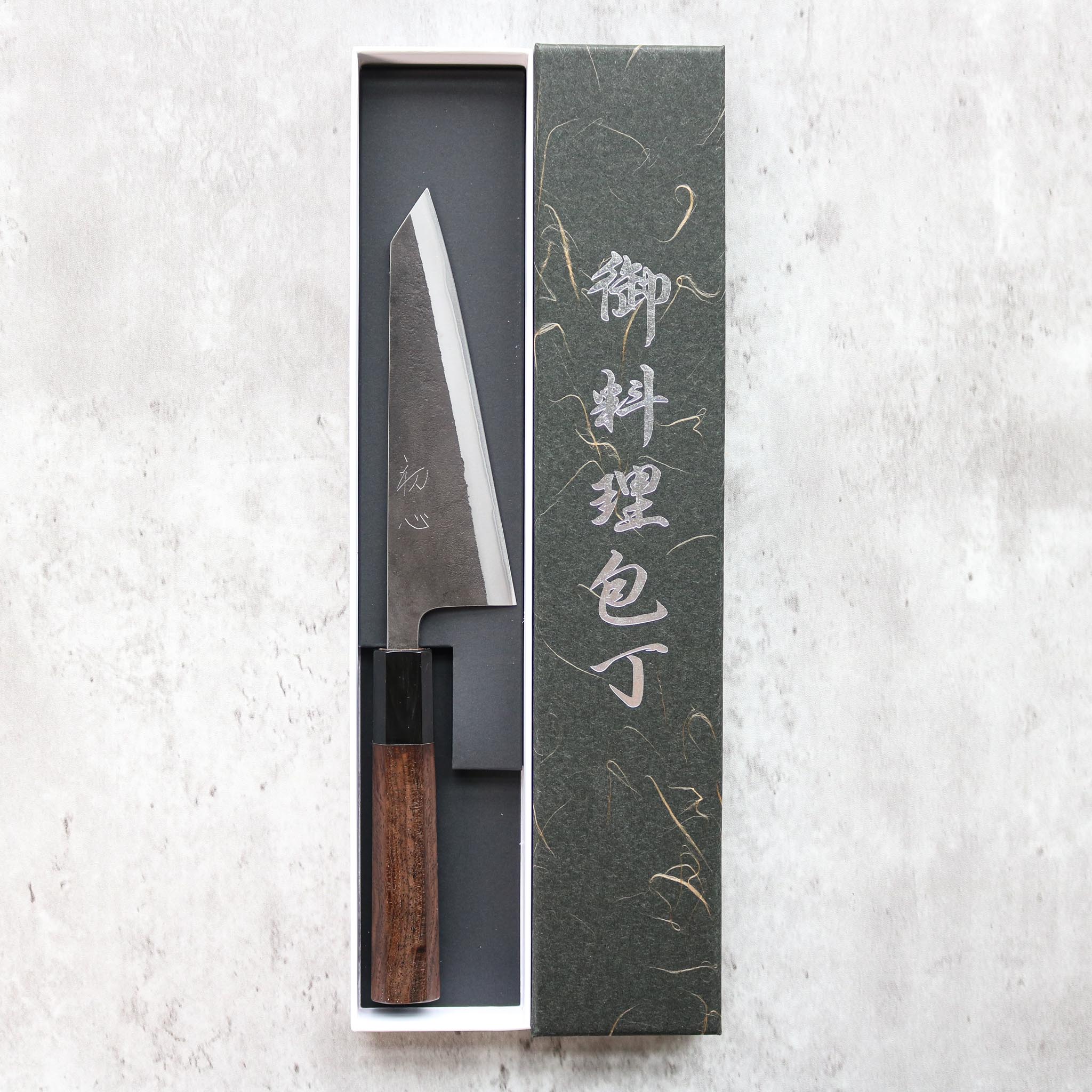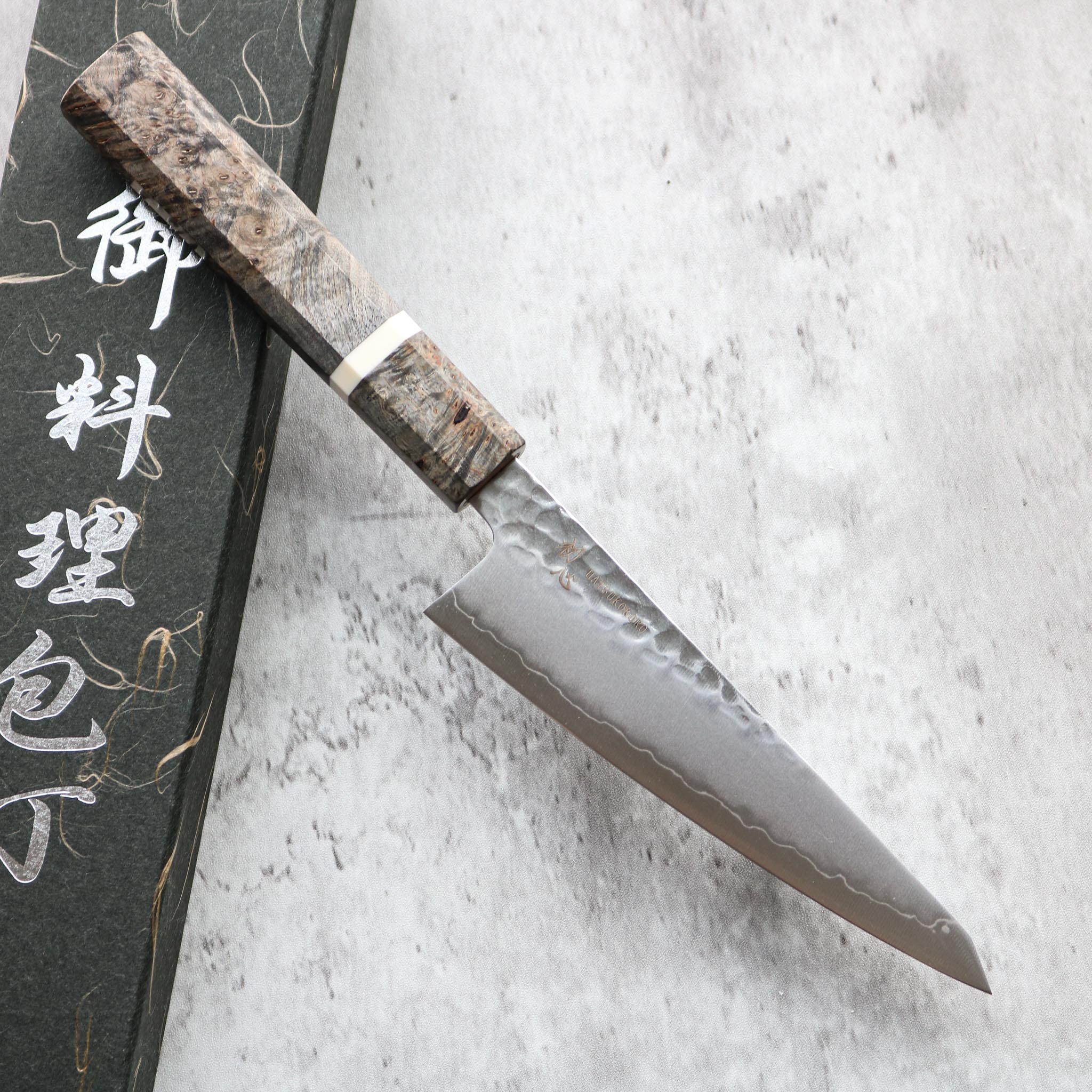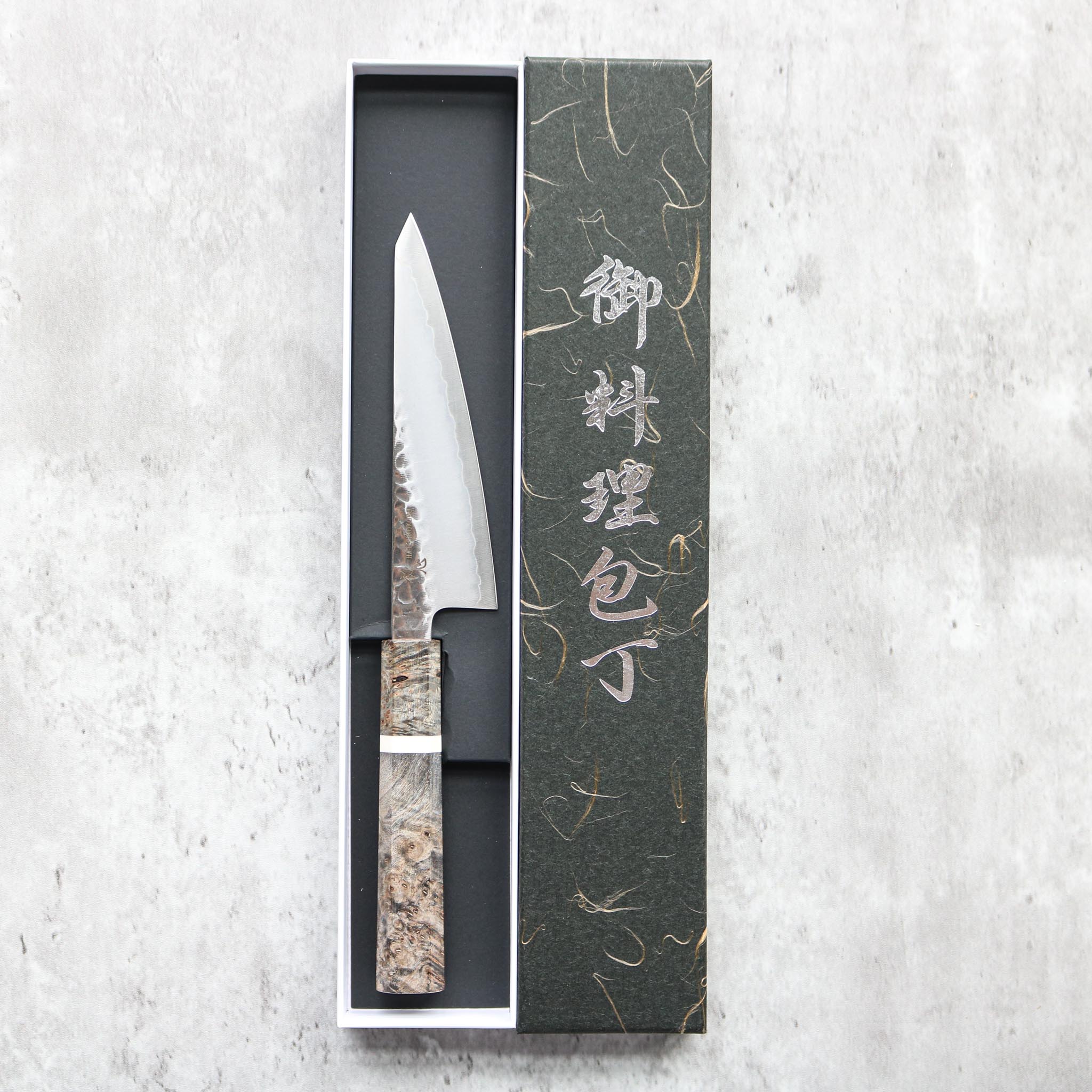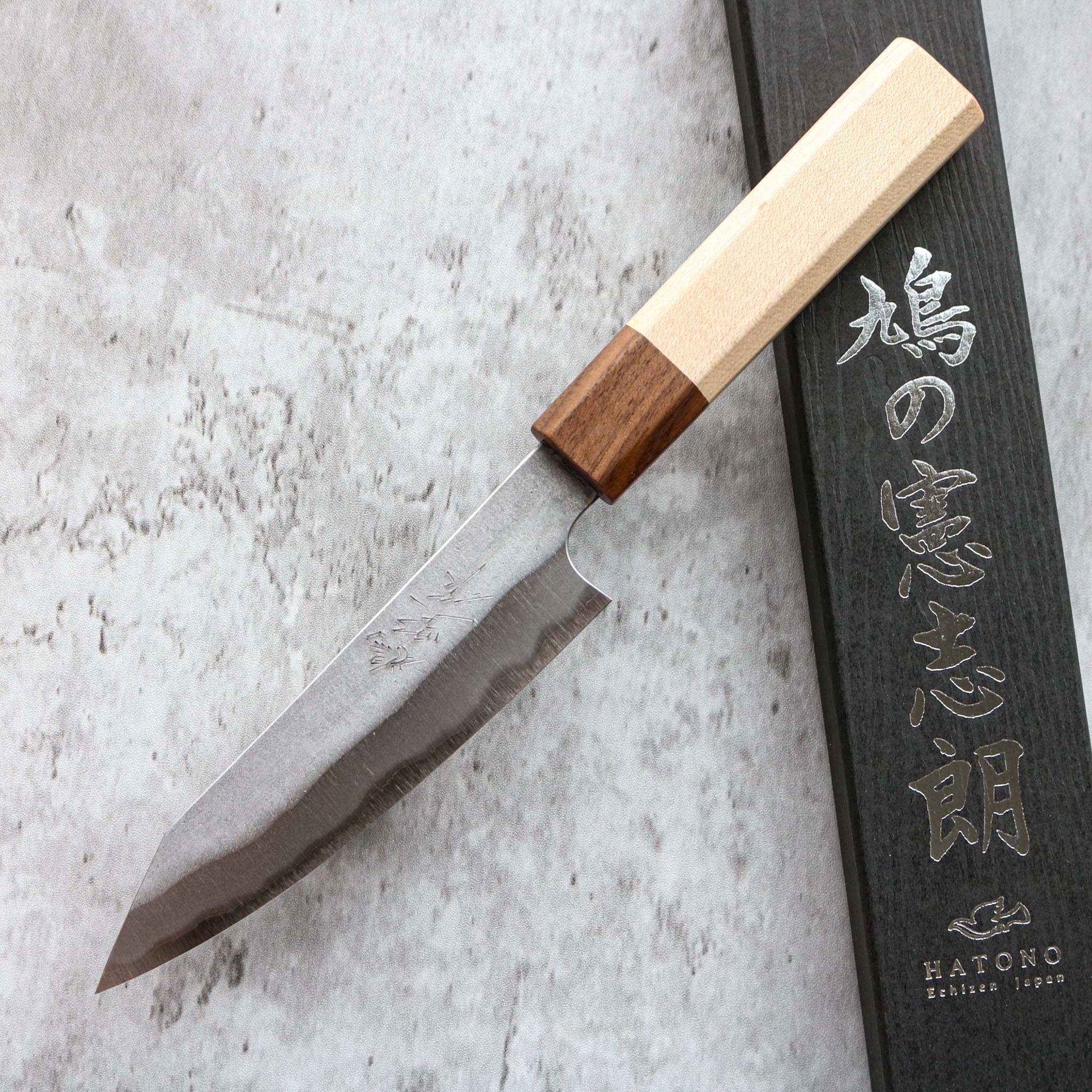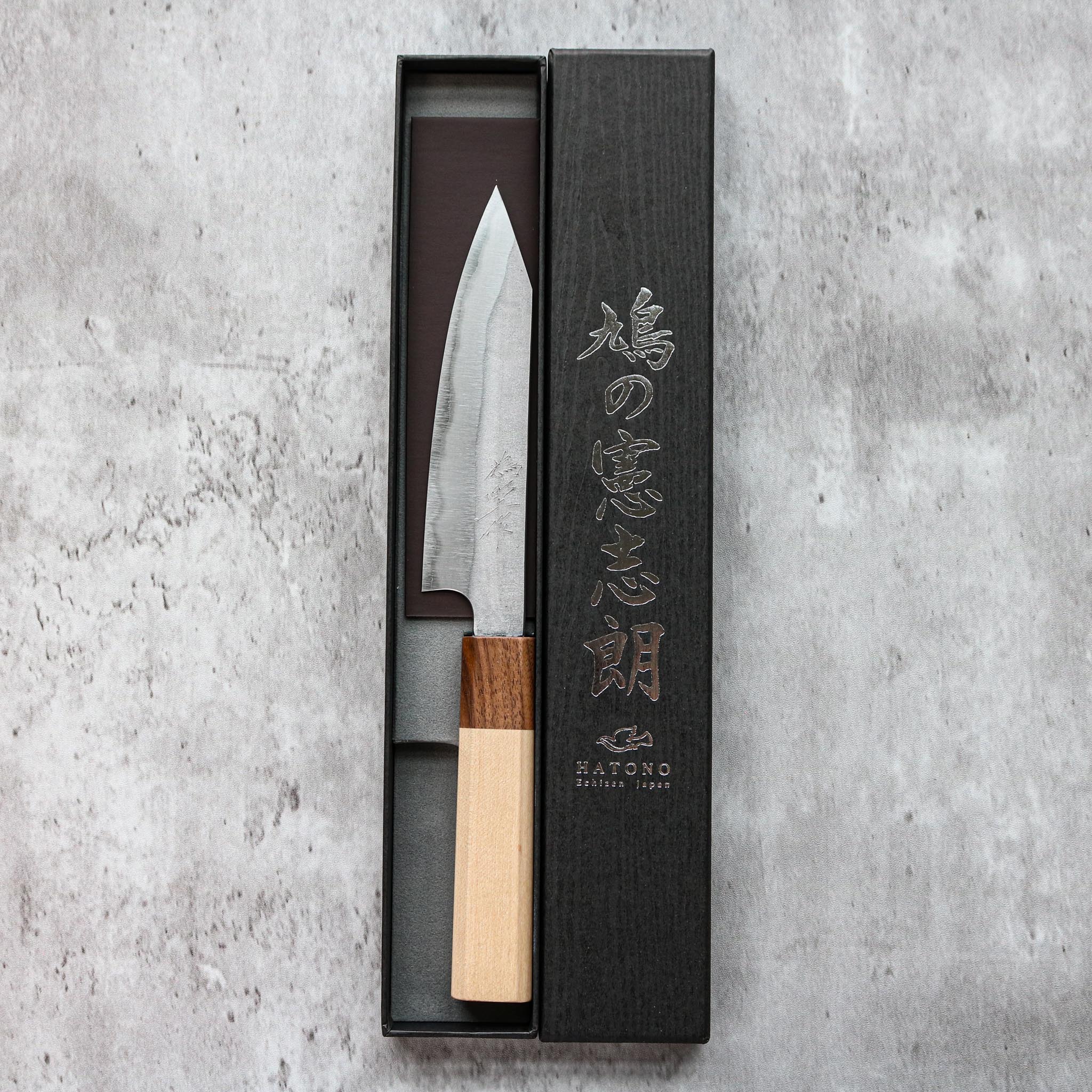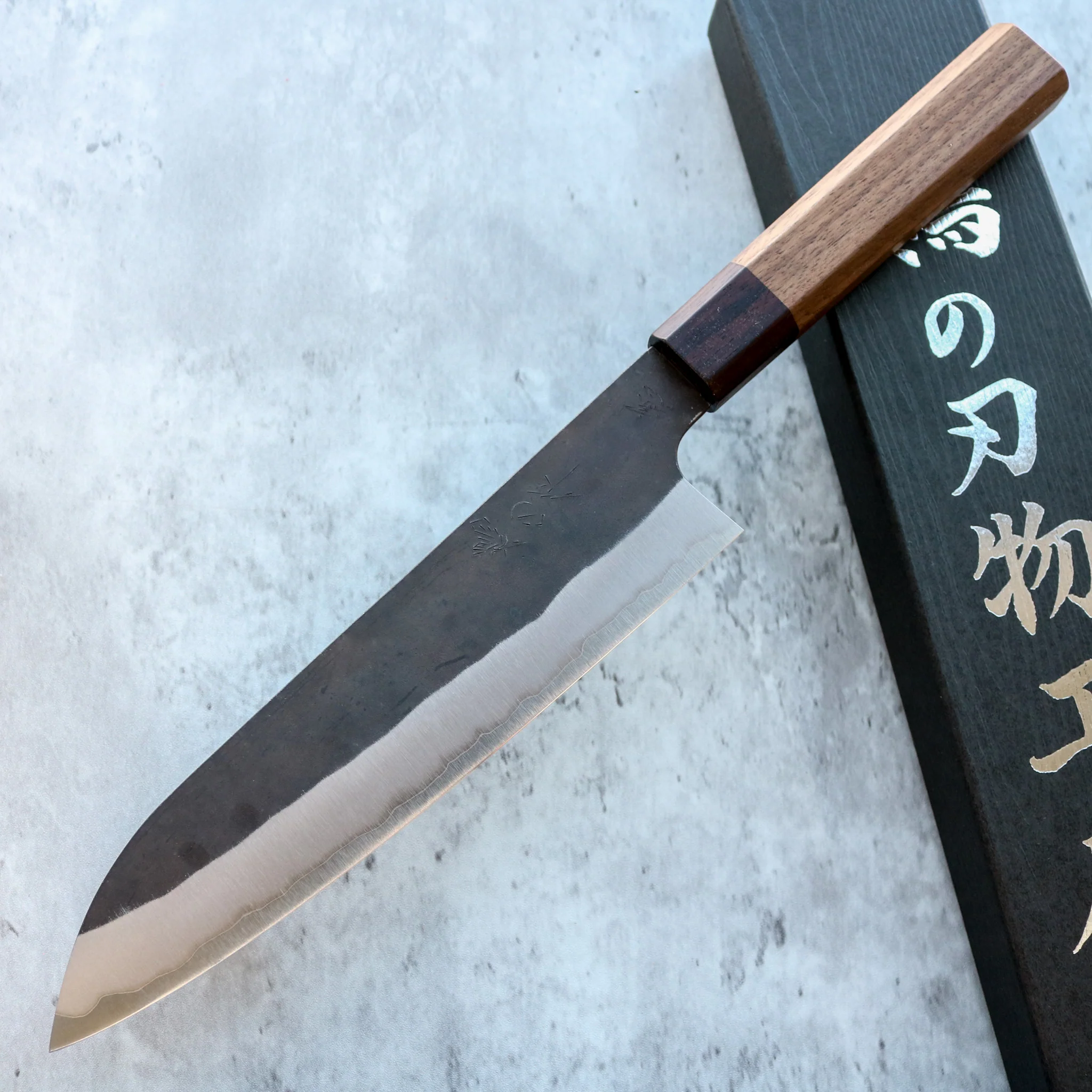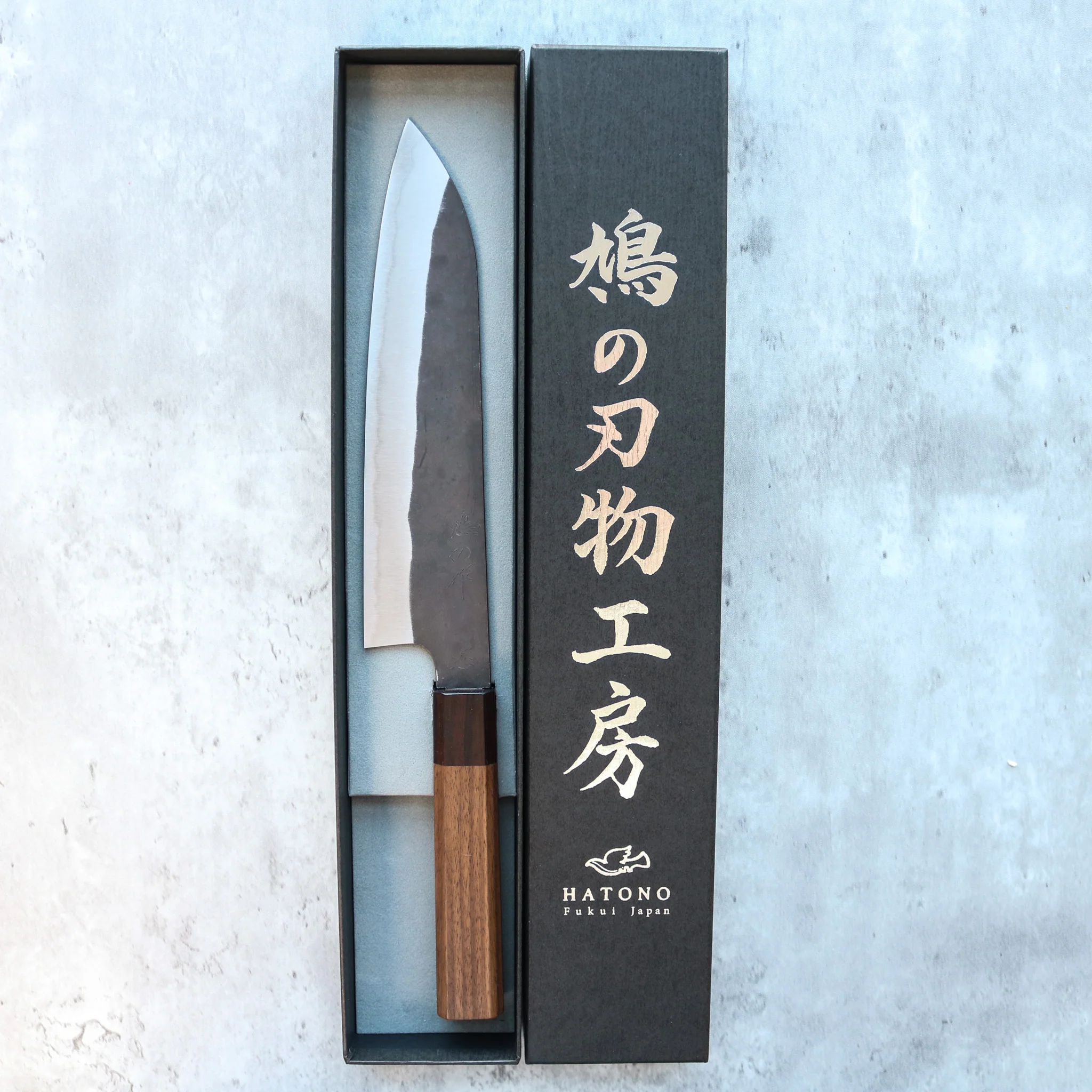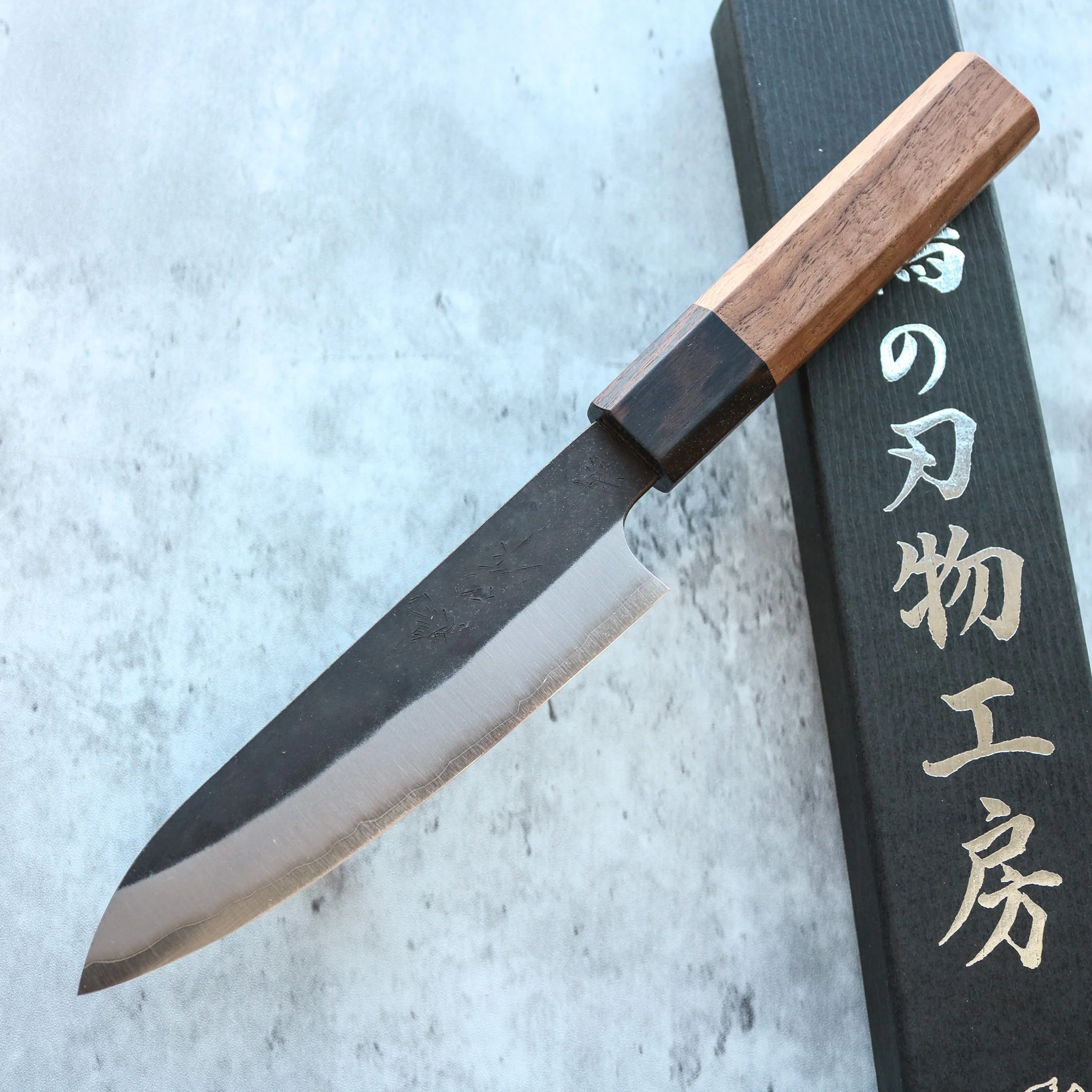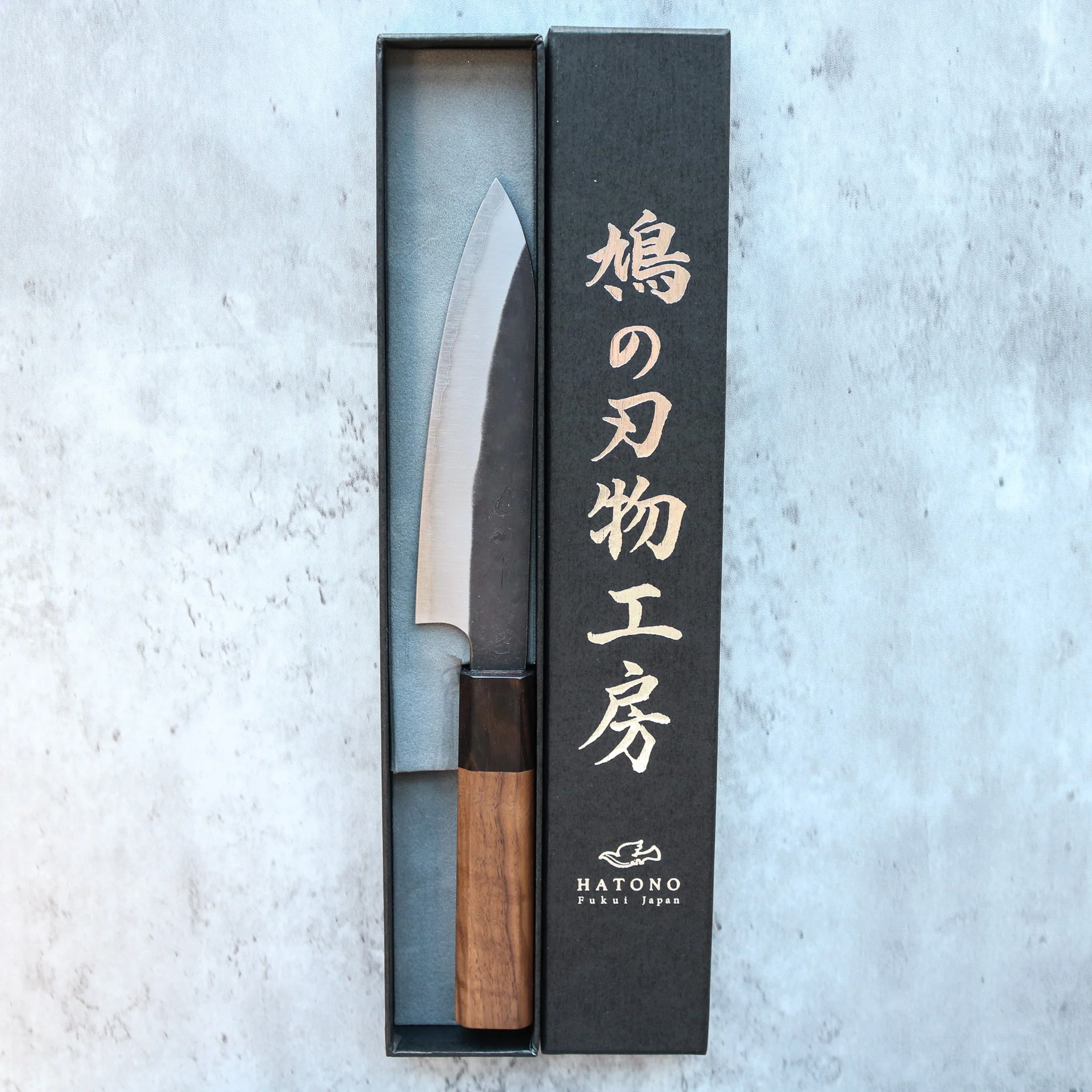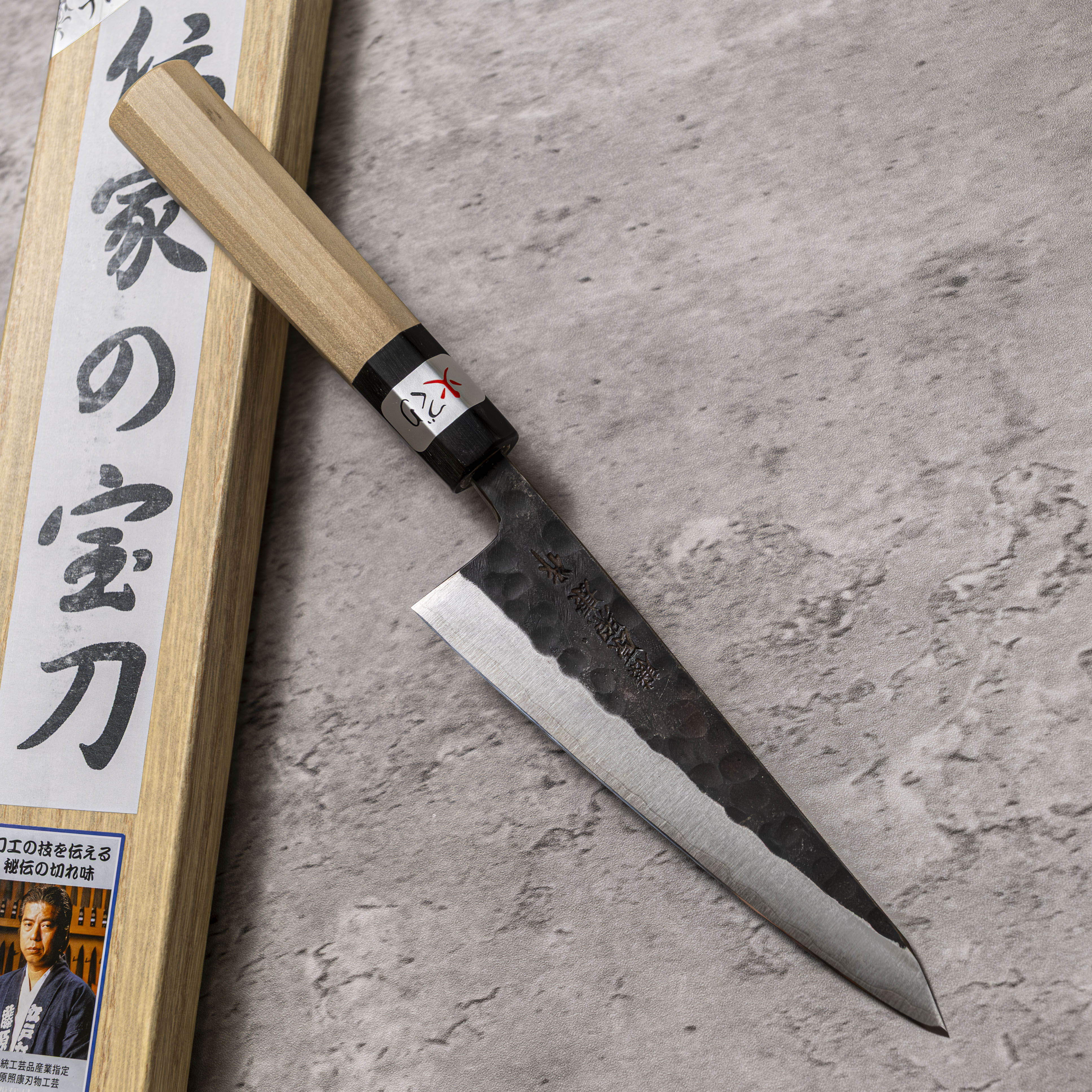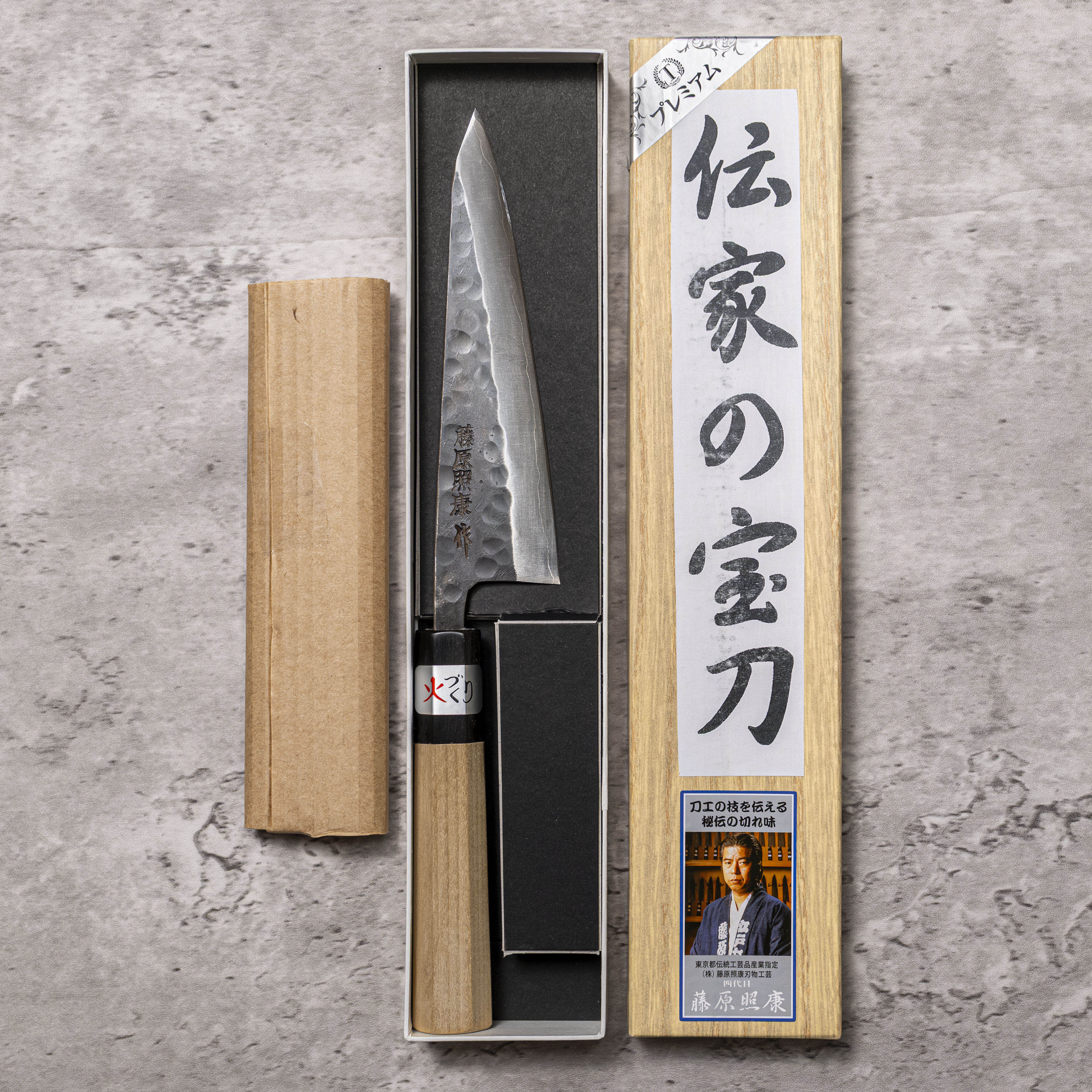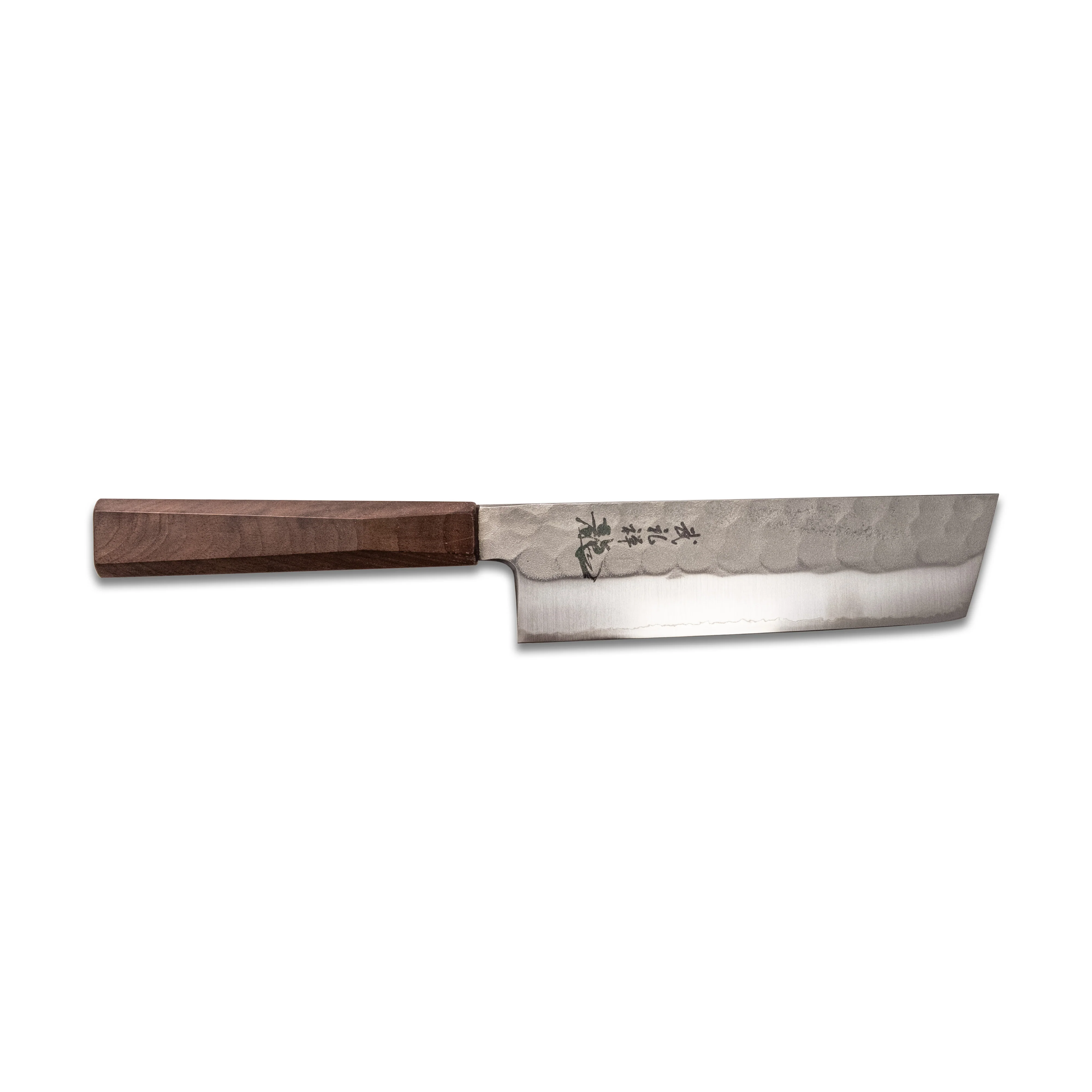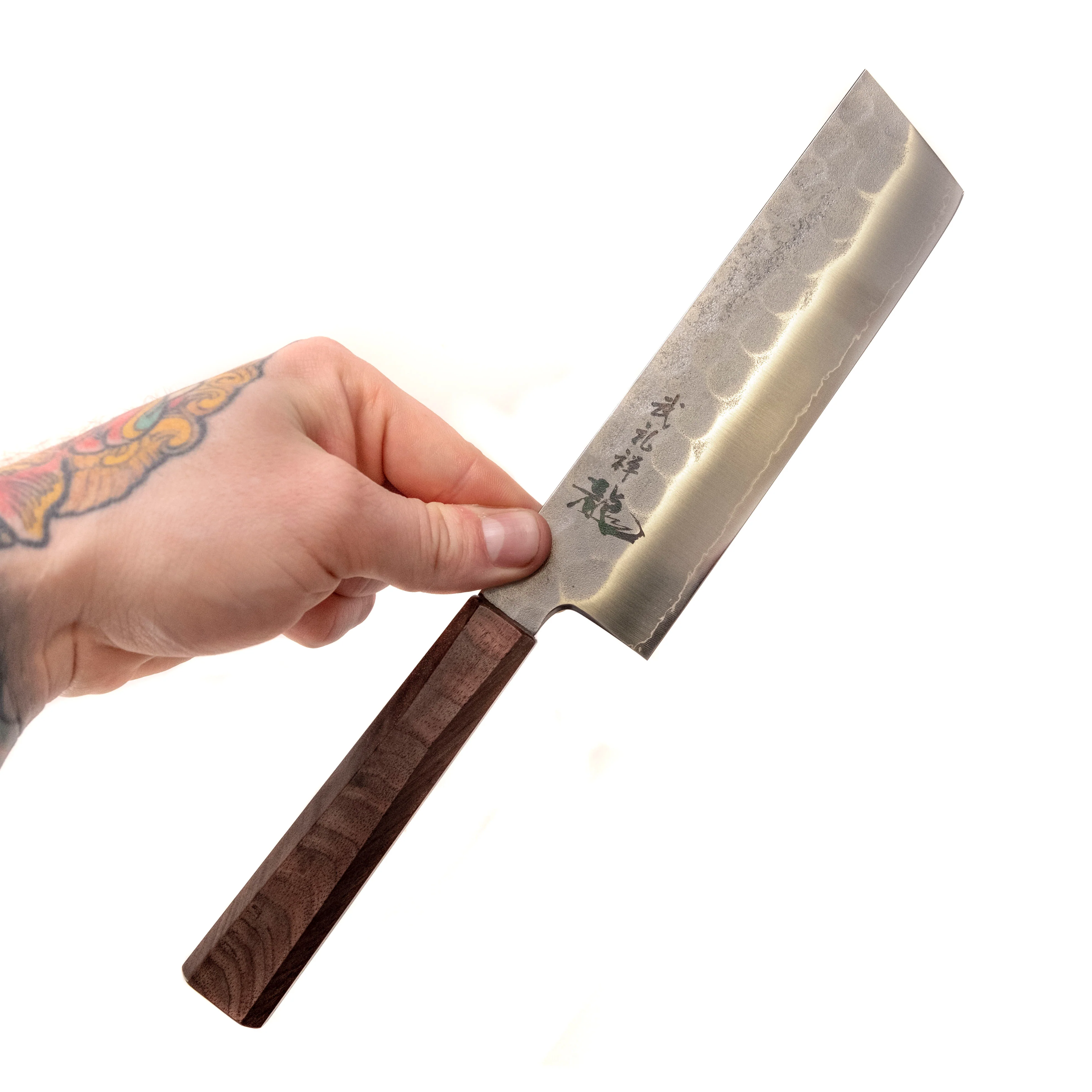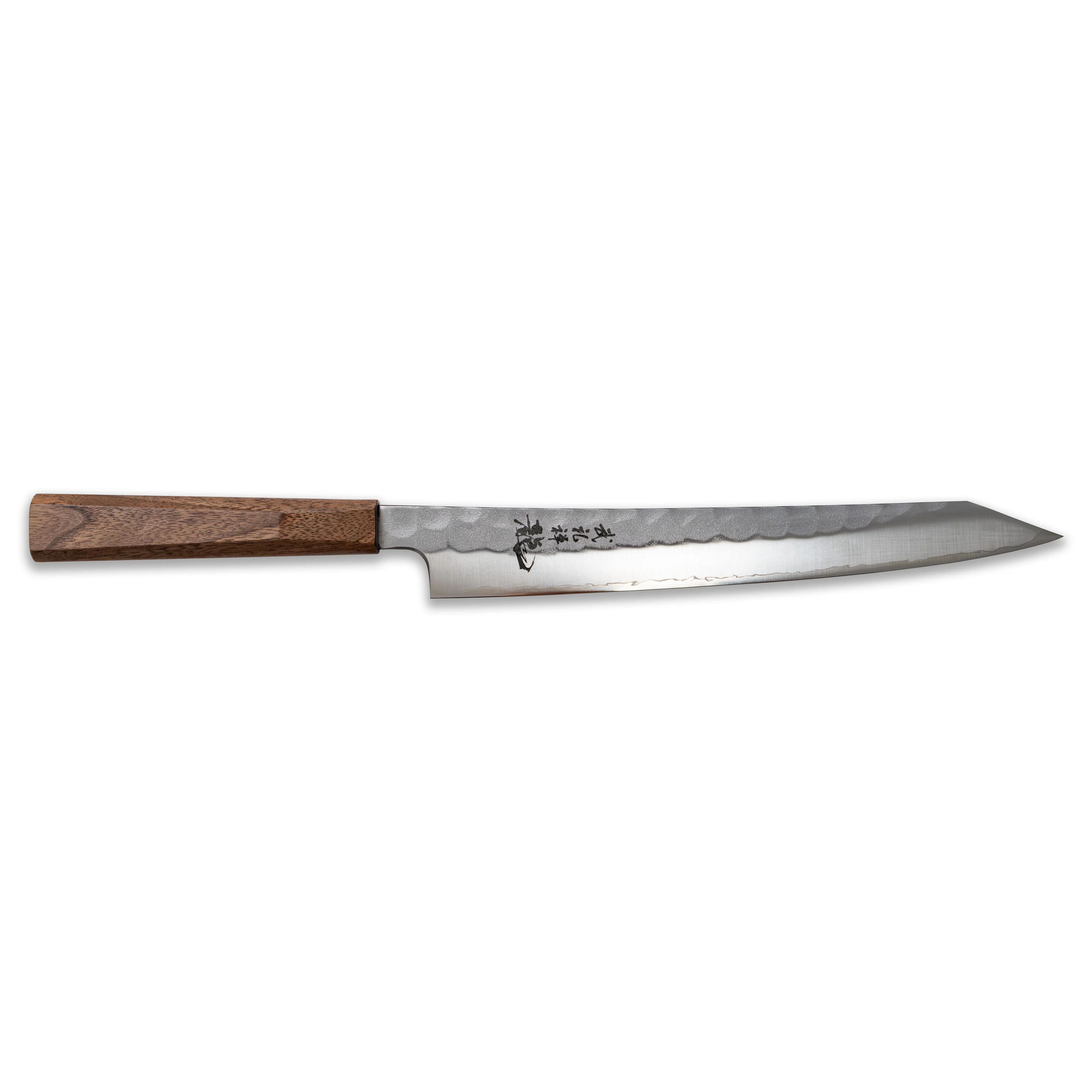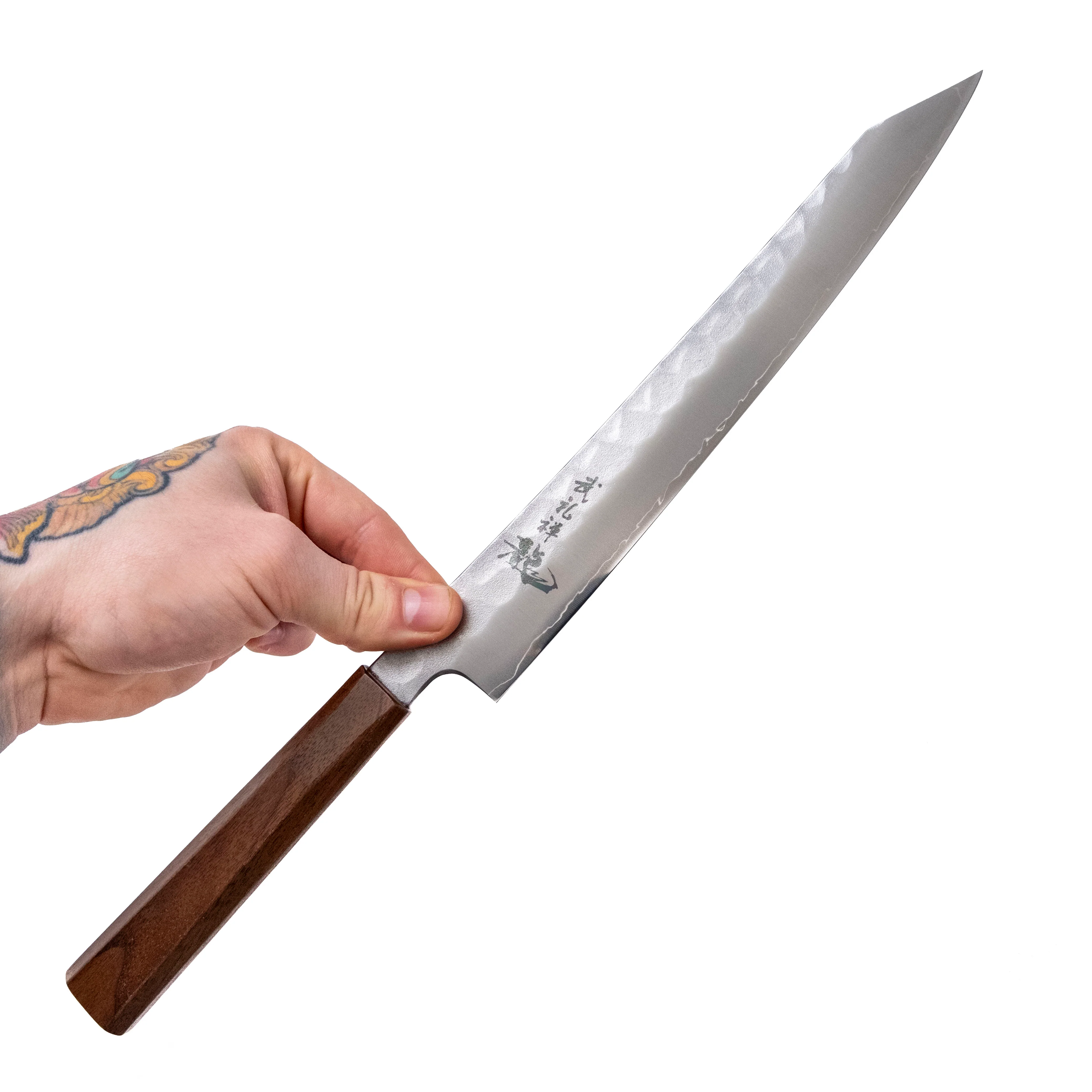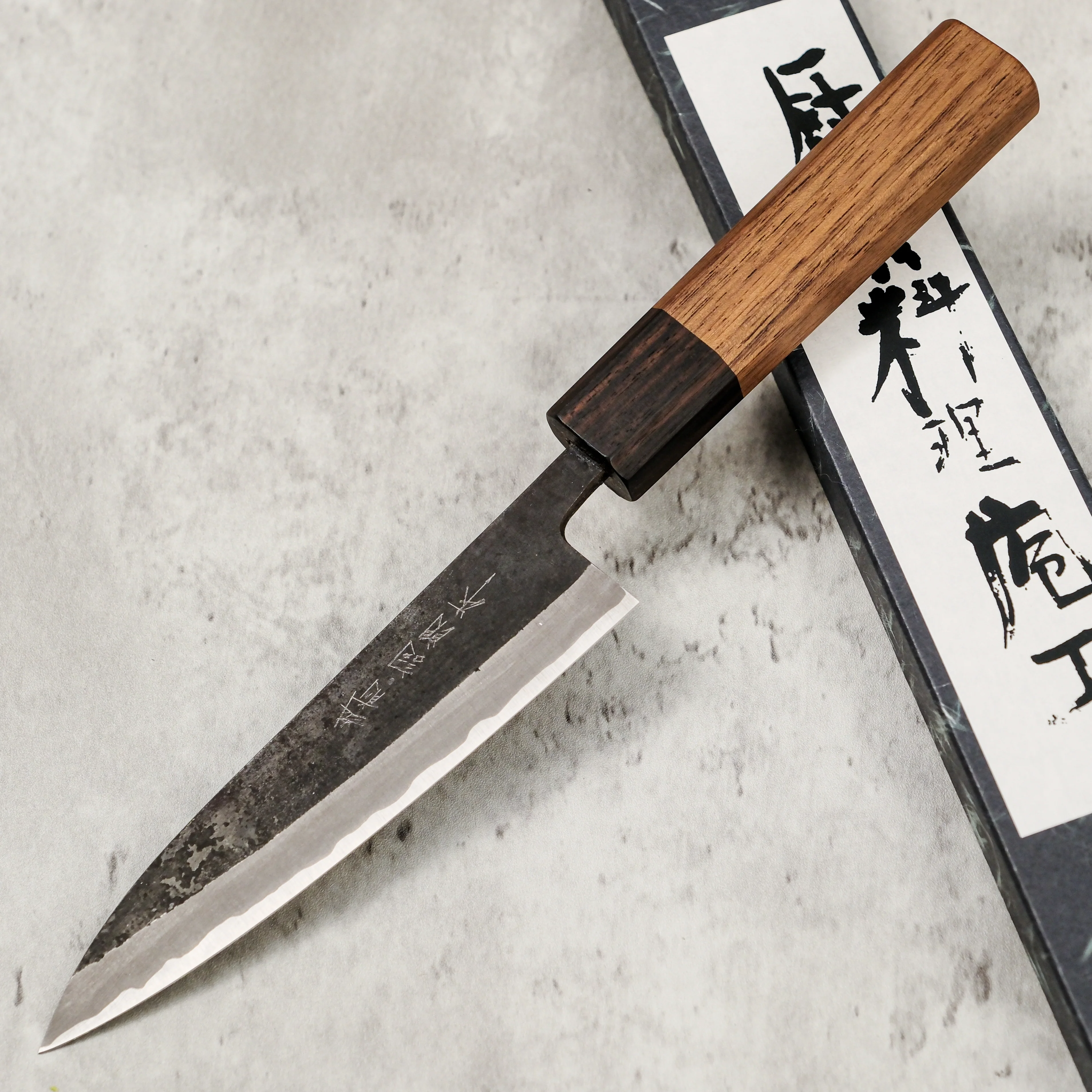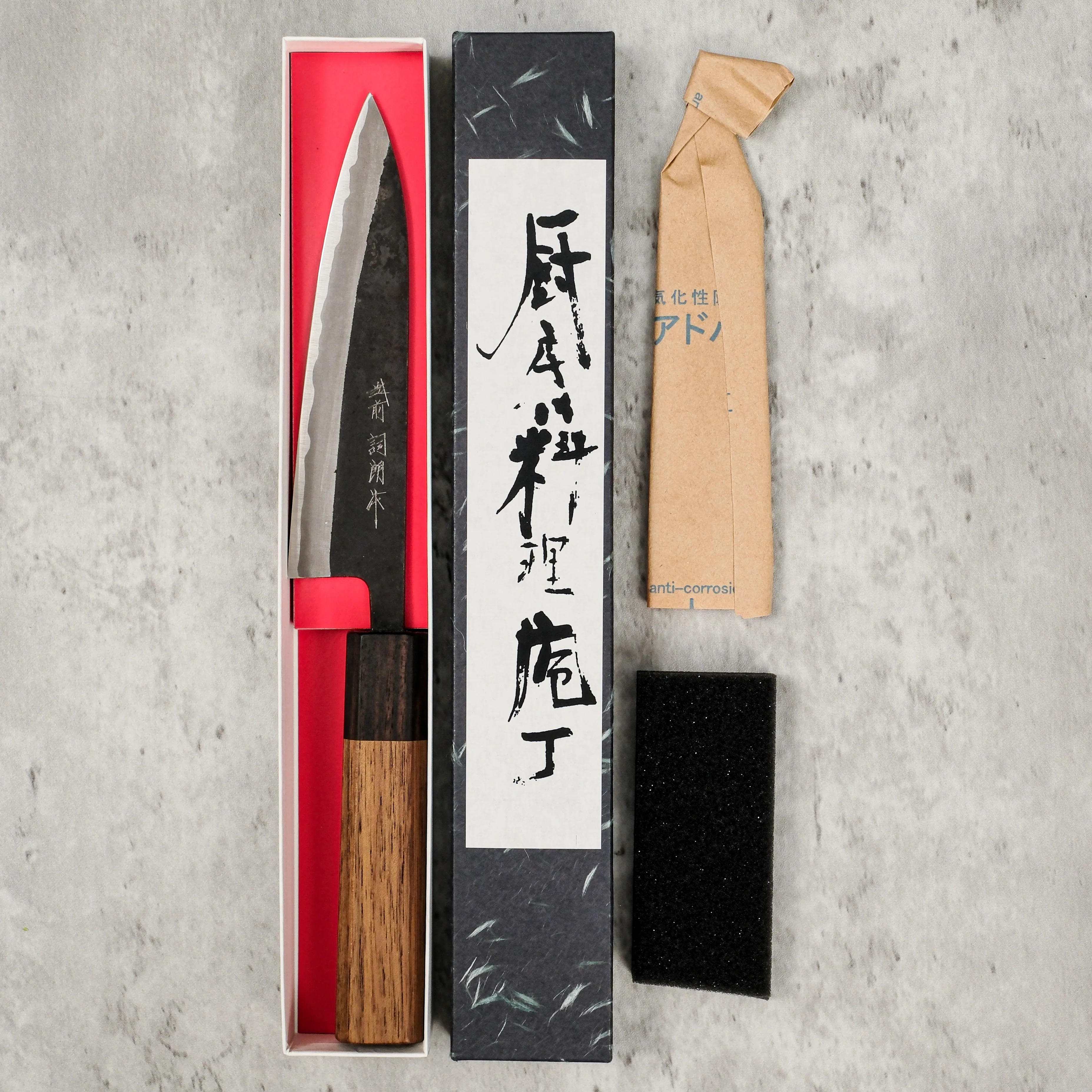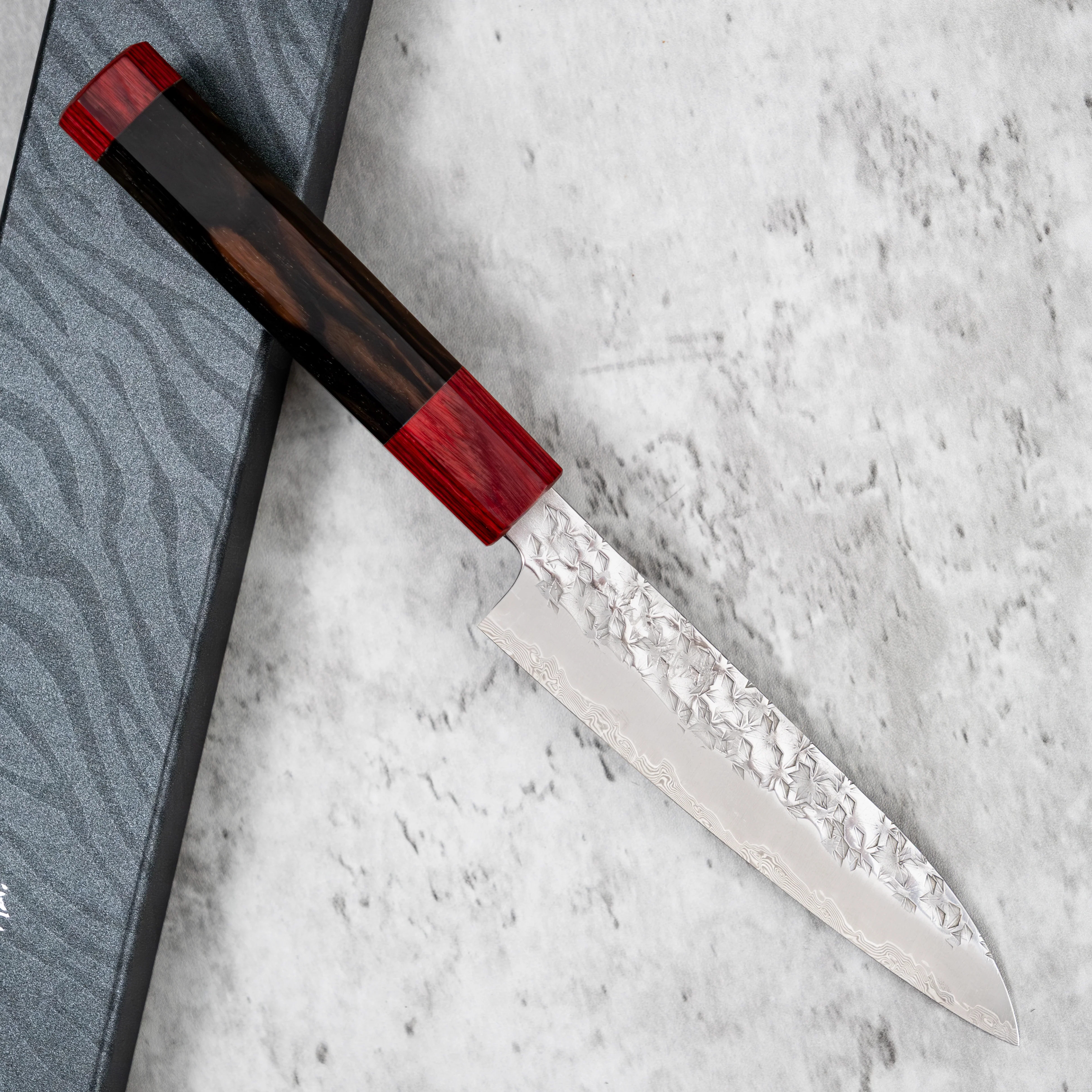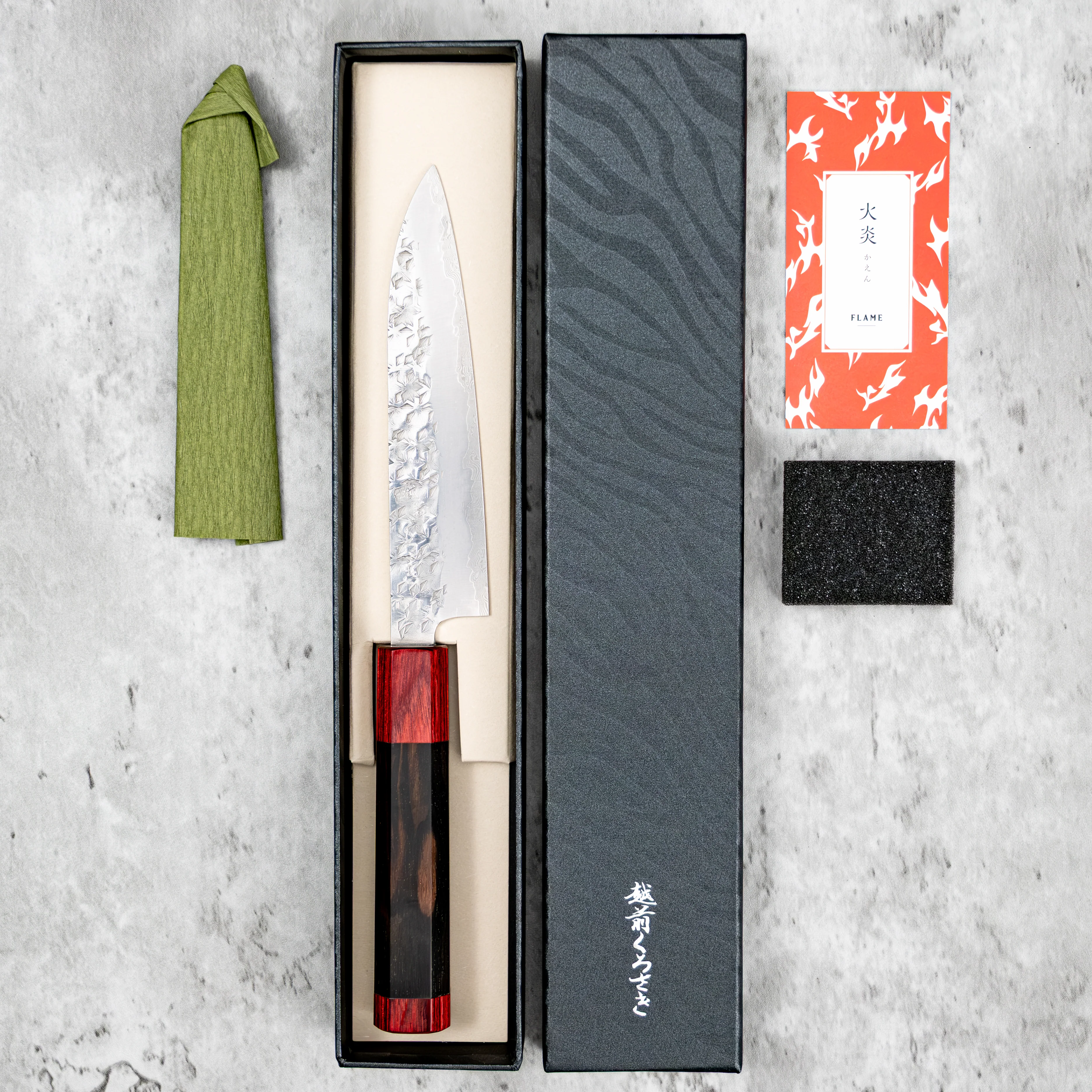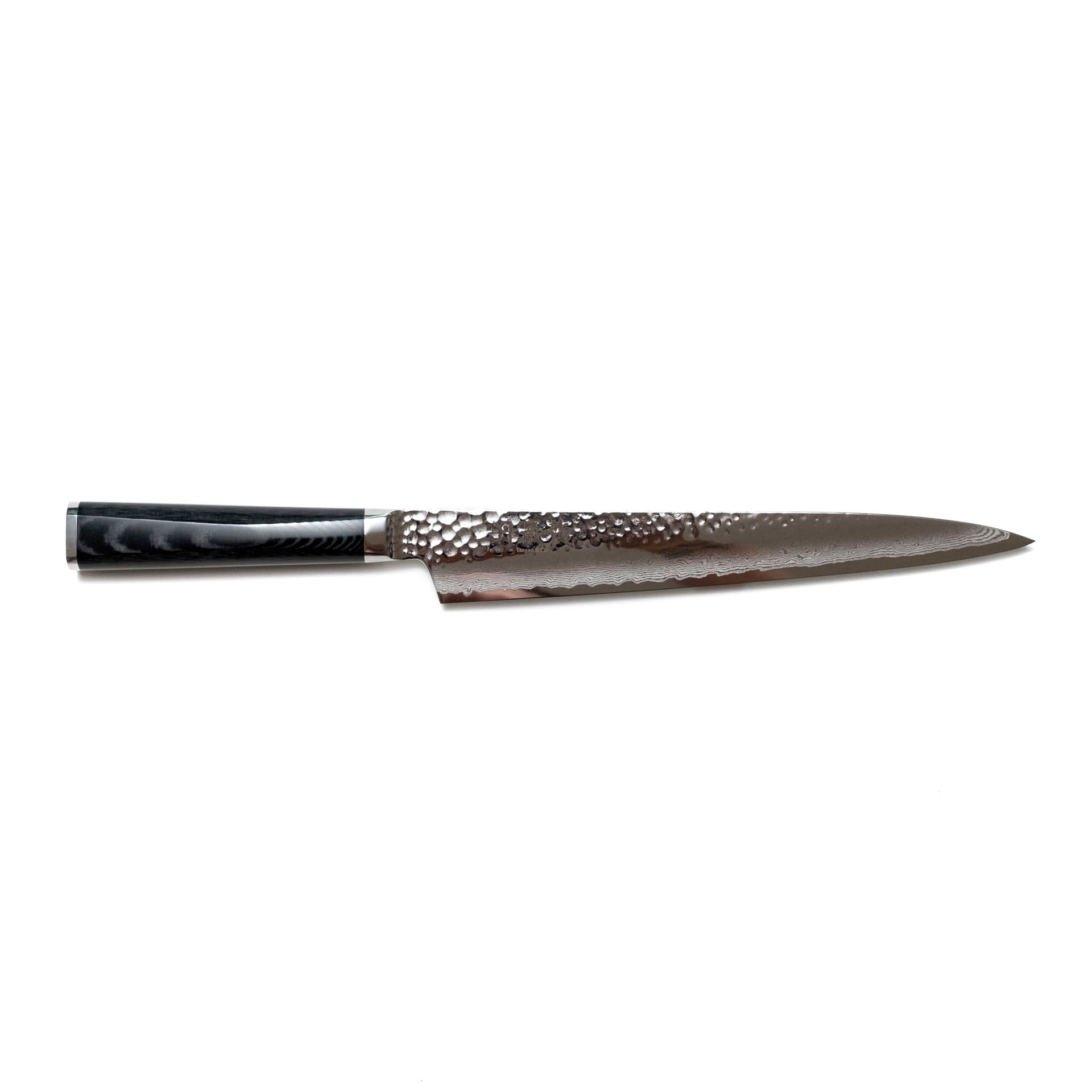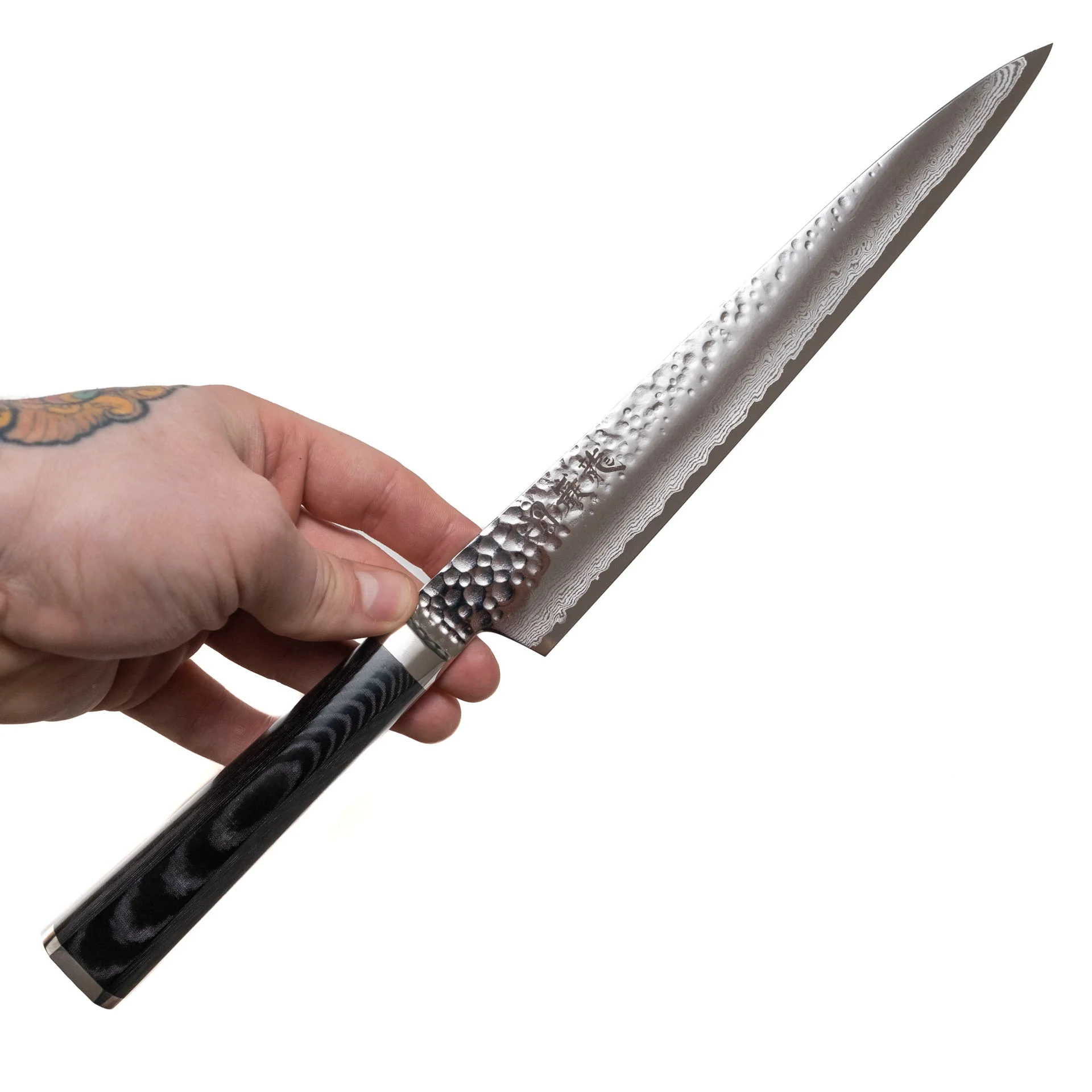
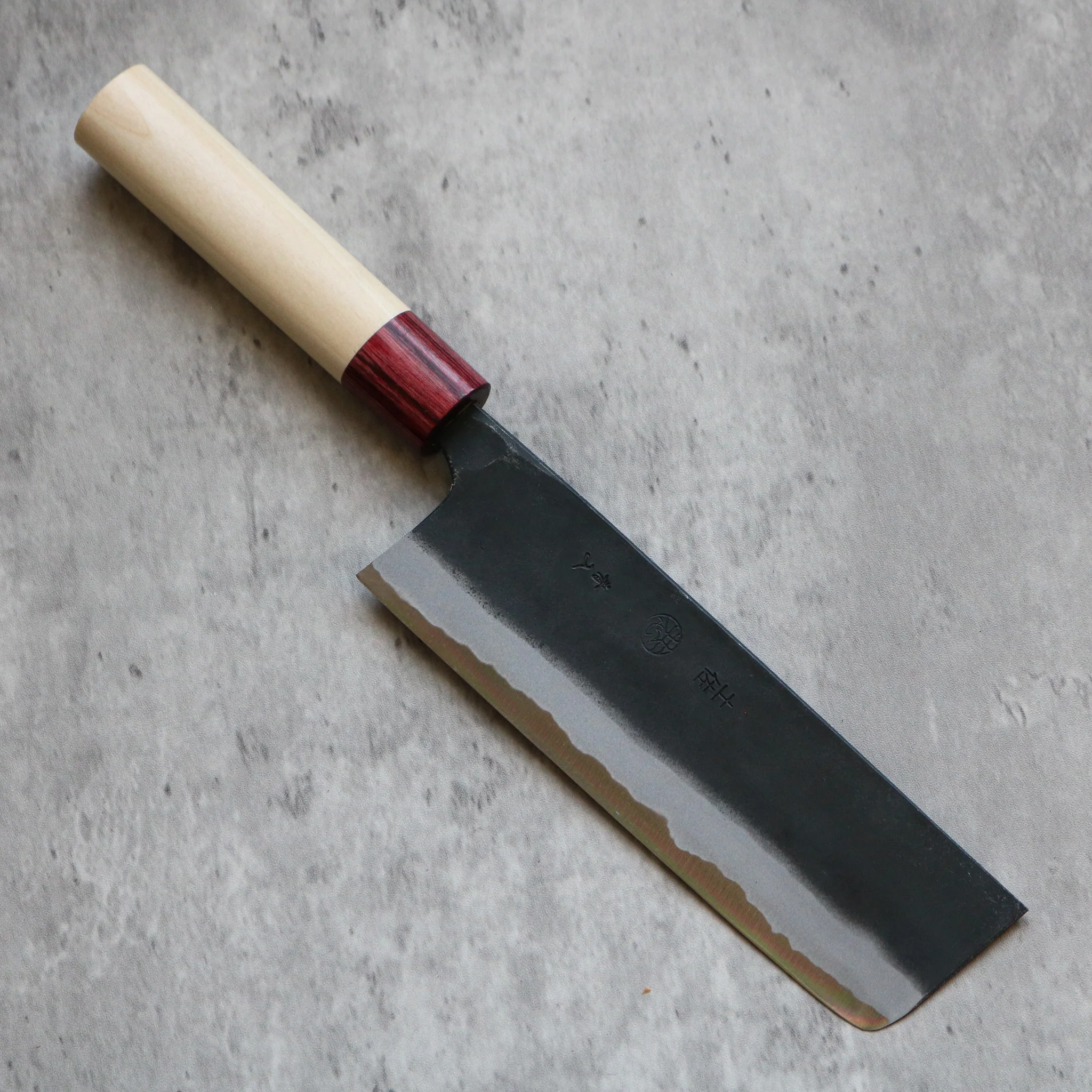
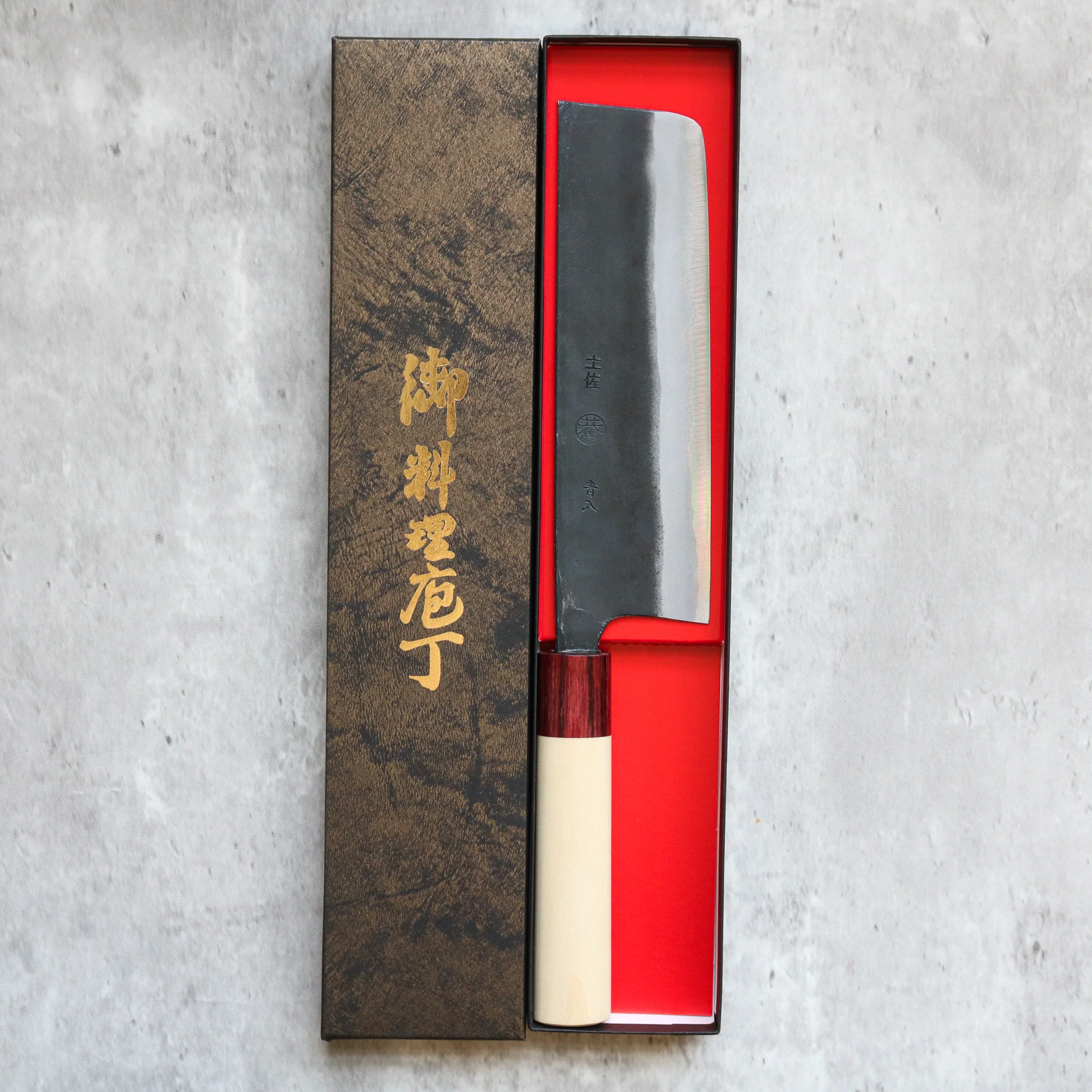
Kyohei Shindou Kurouchi Nakiri 170 mm
| Blade Length | 170 mm |
| Total Length | 325 mm |
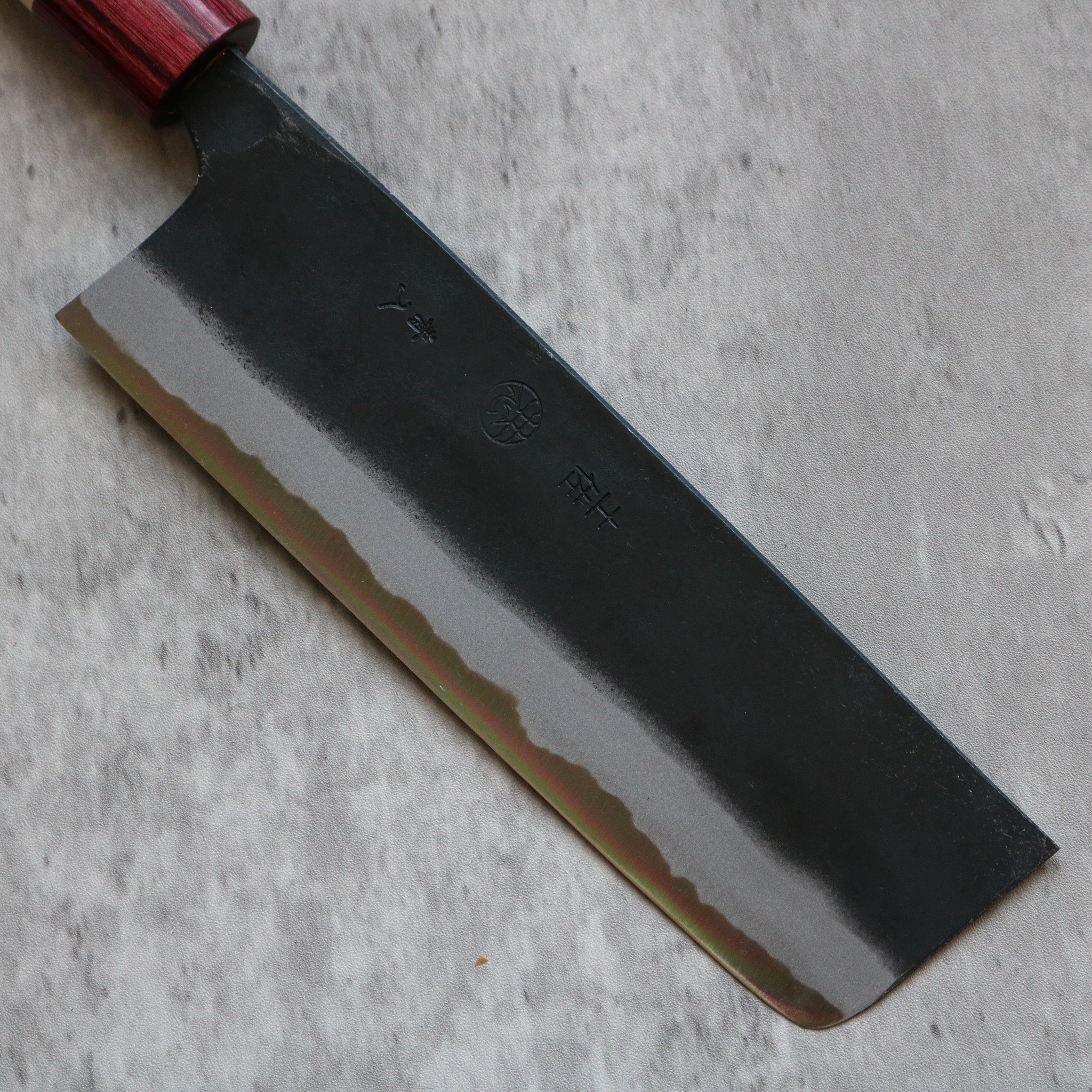
| Steel | Aogami (Blue #2) Iron Clad |
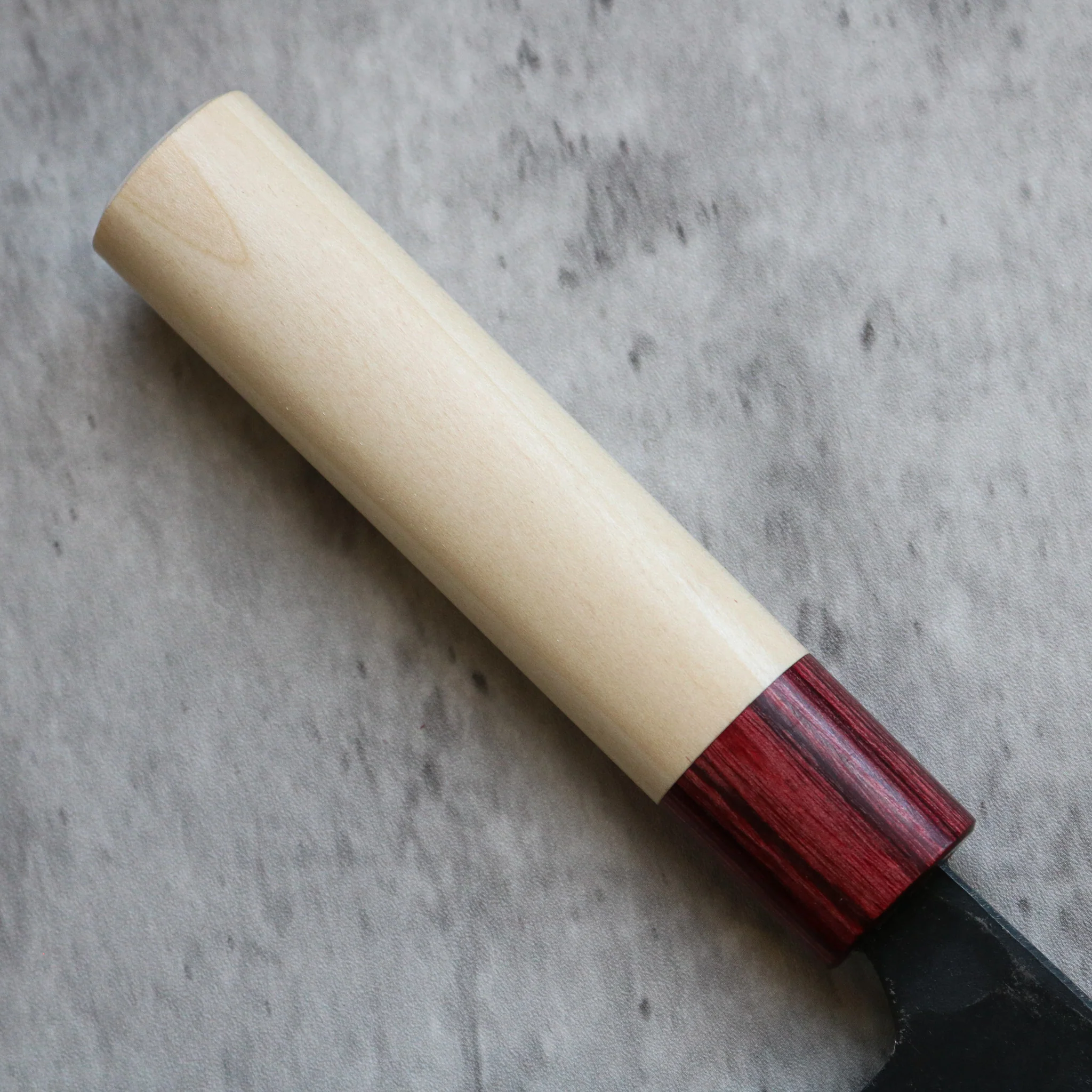
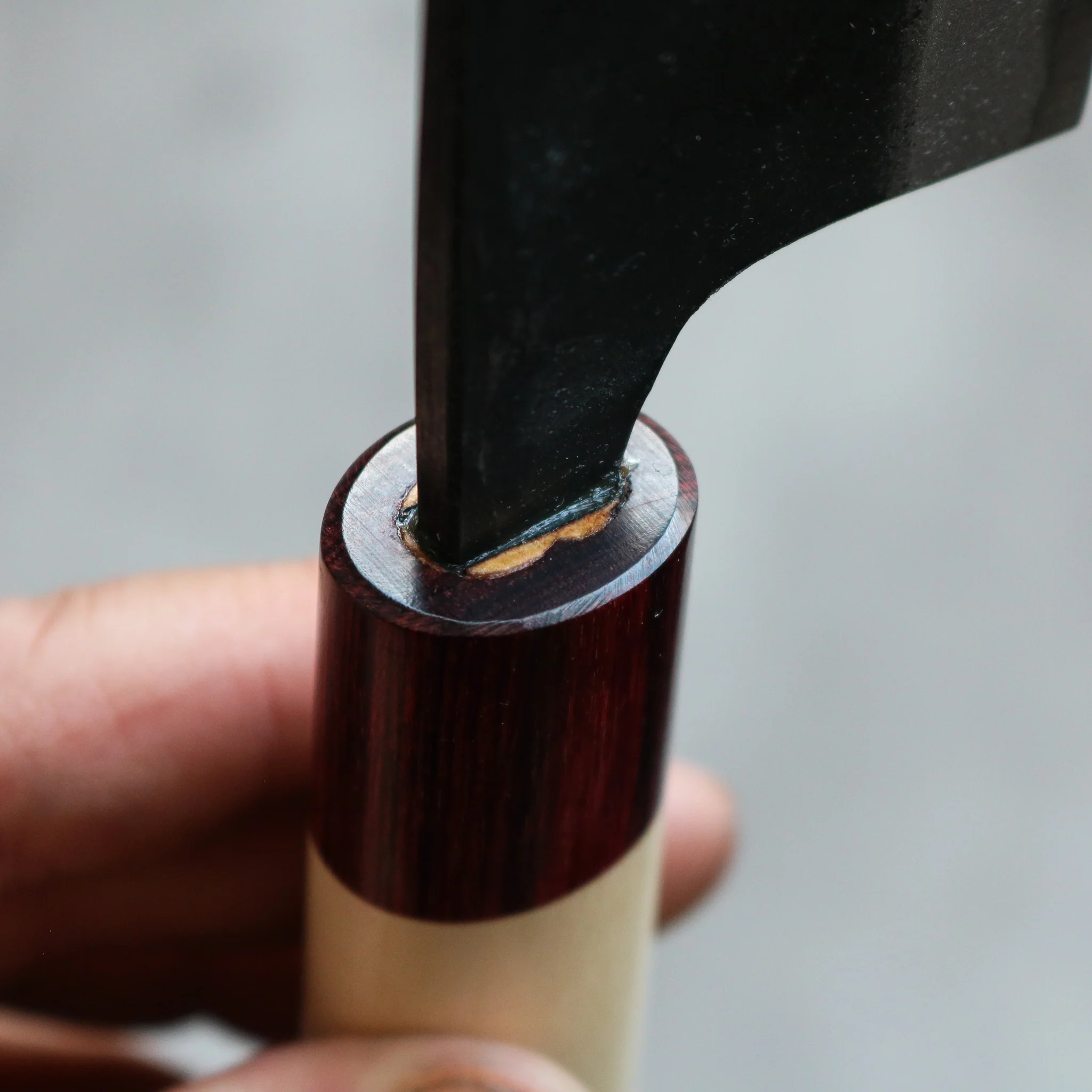
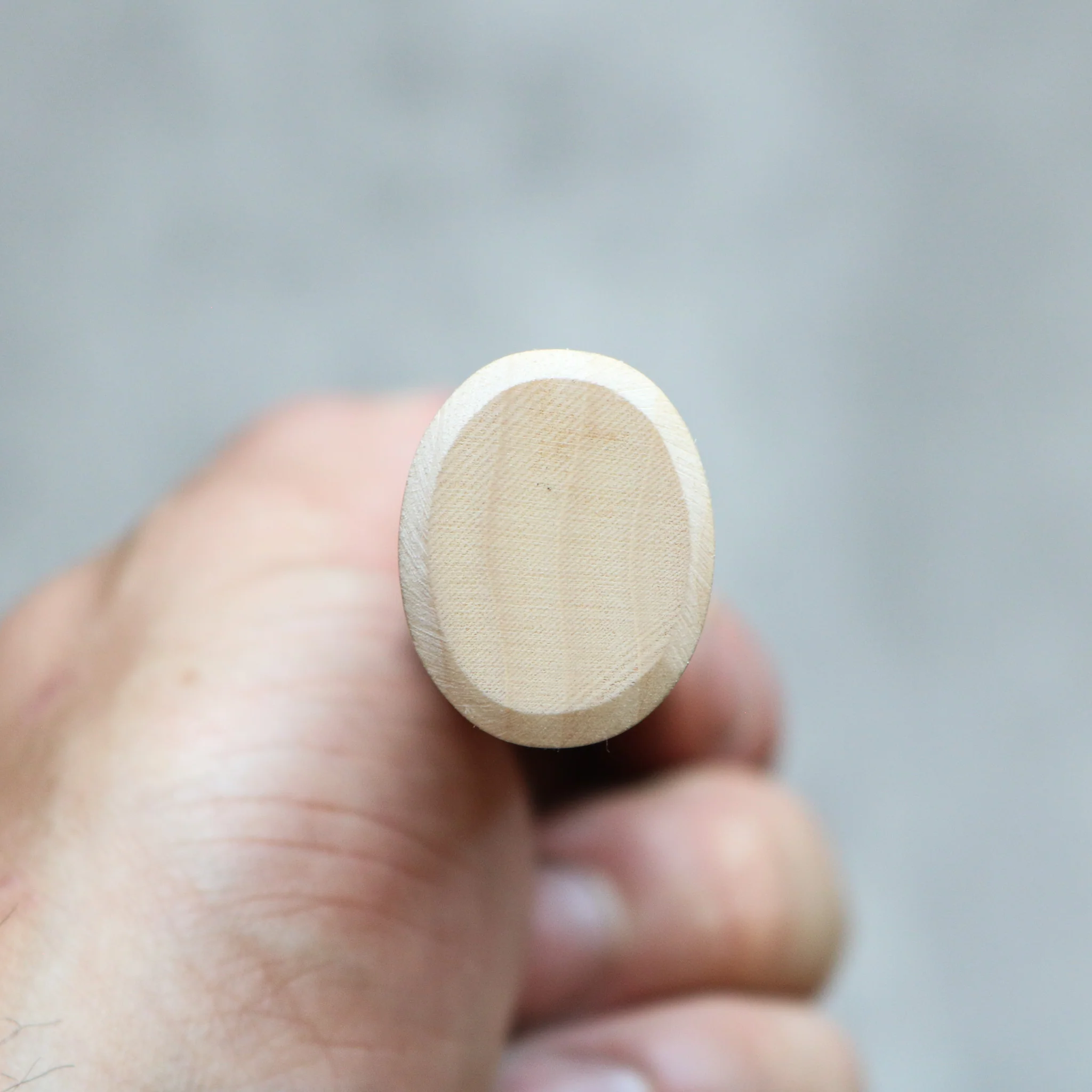
| Handle | Magnolia |
| Ferrule | Red Pakka Wood |
| Rockwell | 61-63 |
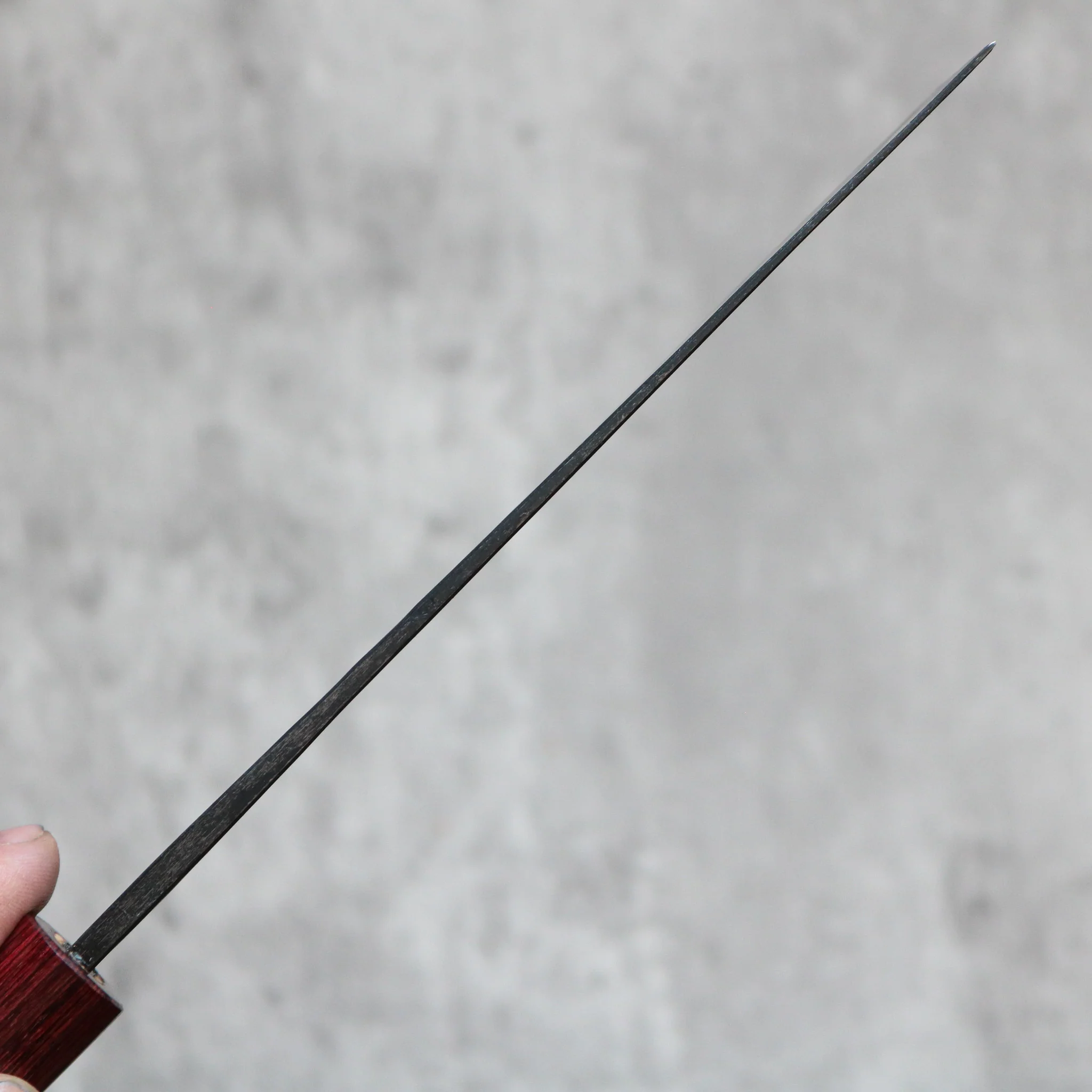
| Height Spine to heel | 53 mm |
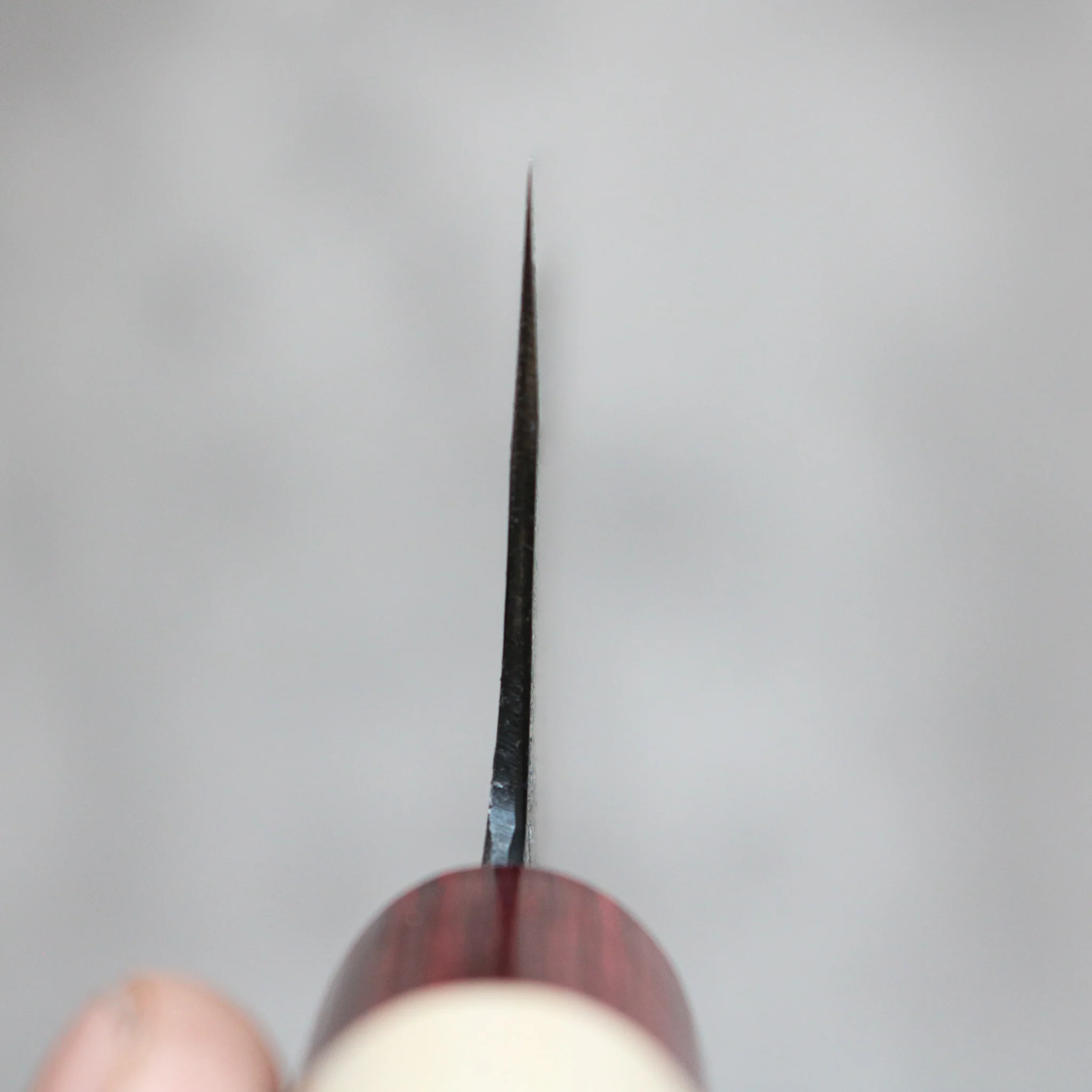
| Width at Spine | 3 mm |
| Weight | 162 grams |
| Bevel | Double (50/50) |
The Blacksmith
Shindou-san is a young blacksmith with a ton of promise. He works out of the Tosa region and while building his workshop, worked as a sales associate for a company that sold knives from this region. His knives feature an iron cladding overtop of aogami #2 steel and features a beautiful clad line separating the core steel from the iron cladding. His knives are quite light and are nice and thin behind the edge providing a fantastic cutting feel. For the price, it's hard to beat these knives.
The Shape
The Nakiri is designed for vegetable chopping. It has a flat profile (less curved blade) that helps the knife make consistent contact with the cutting board when using an up and down chopping motion, helping to avoid pesky accordions of stuck together ingredients. Any well rounded kit should contain a Nakiri, but if this is your first knife you might consider a Gyuto, Santoku or Bunka, as their pointed tips makes them more versatile.
Knife Care (Iron Clad)
- This Knife is made from 3 layers of material; A layer of iron on each side protecting a layer of carbon steel at the core, in a process referred to as Sanmai or forge welding. Iron and carbon steel are both susceptible to rust and must be kept dry and clean at all time’s to avoid oxidation and discolouration.
- Simply wipe the knife with a damp cloth immediately after use.
- Wash with regular dish soap and warm water using a none abrasive sponge or cloth.
- Never put your knife in the dishwasher! The extreme heat will ruin the wooden handle.
- Highly acidic ingredients (Onions, Tomatoes, Citrus) Will cause rust and oxidation to happen faster, thus the user must ensure the knife is wiped clean immediately after working with such an ingredient.
- Should any rust form it can be removed using a rust eraser or a mixture of Baking soda and water to simply scrub it clean.
- Avoid Bones, Frozen foods, nuts and hard candies or anything other than fruits, vegetables and proteins.
Product Information
Product Information
Shipping & Returns
Shipping & Returns
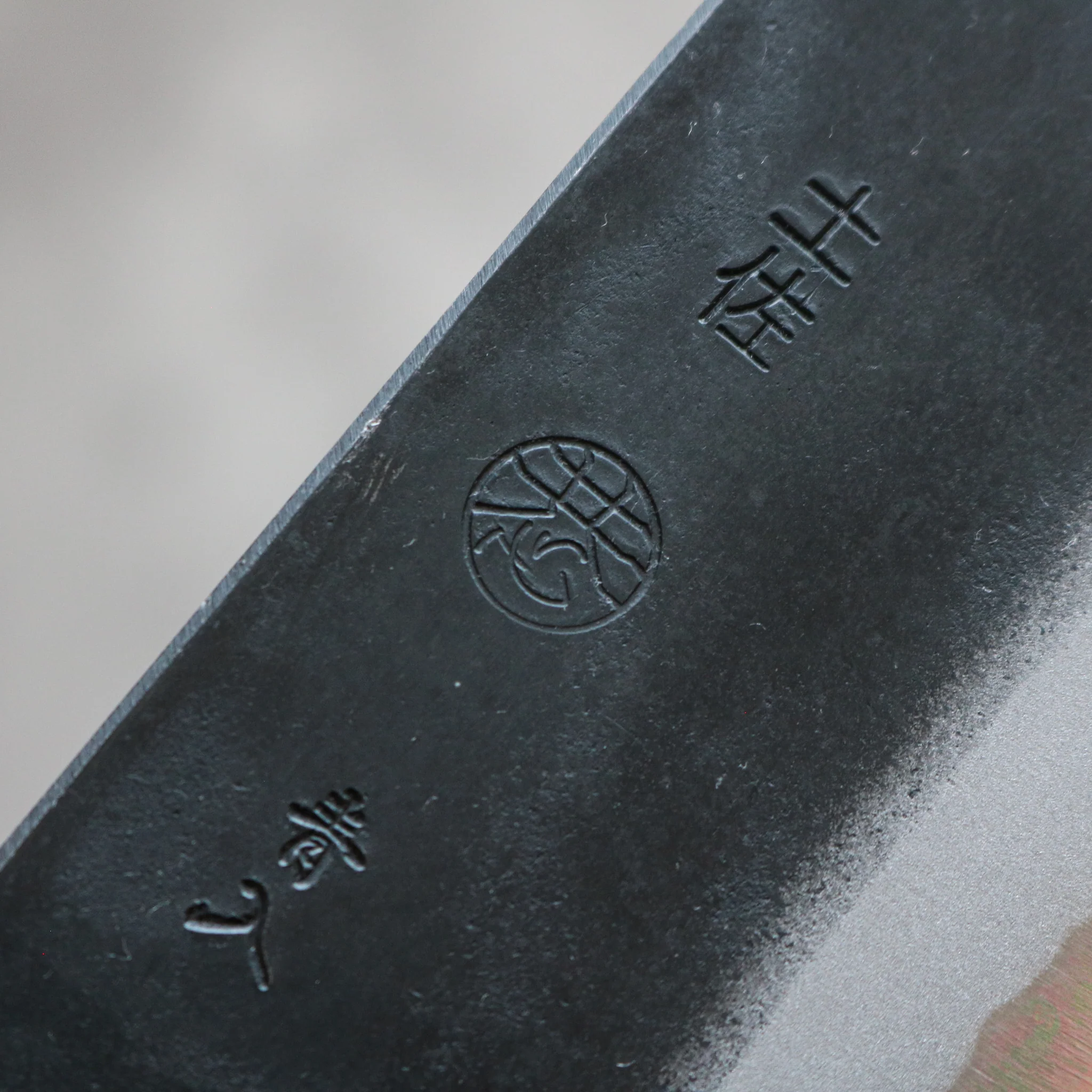
Kyohei Shindou Kurouchi Nakiri 170 mm
Kyohei Shindou Kurouchi Nakiri 170 mm
| Blade Length | 170 mm |
| Total Length | 325 mm |
| Steel | Aogami (Blue #2) Iron Clad |
| Handle | Magnolia |
| Ferrule | Red Pakka Wood |
| Rockwell | 61-63 |
| Height Spine to heel | 53 mm |
| Width at Spine | 3 mm |
| Weight | 162 grams |
| Bevel | Double (50/50) |
The Blacksmith
Shindou-san is a young blacksmith with a ton of promise. He works out of the Tosa region and while building his workshop, worked as a sales associate for a company that sold knives from this region. His knives feature an iron cladding overtop of aogami #2 steel and features a beautiful clad line separating the core steel from the iron cladding. His knives are quite light and are nice and thin behind the edge providing a fantastic cutting feel. For the price, it's hard to beat these knives.
The Shape
The Nakiri is designed for vegetable chopping. It has a flat profile (less curved blade) that helps the knife make consistent contact with the cutting board when using an up and down chopping motion, helping to avoid pesky accordions of stuck together ingredients. Any well rounded kit should contain a Nakiri, but if this is your first knife you might consider a Gyuto, Santoku or Bunka, as their pointed tips makes them more versatile.
Knife Care (Iron Clad)
- This Knife is made from 3 layers of material; A layer of iron on each side protecting a layer of carbon steel at the core, in a process referred to as Sanmai or forge welding. Iron and carbon steel are both susceptible to rust and must be kept dry and clean at all time’s to avoid oxidation and discolouration.
- Simply wipe the knife with a damp cloth immediately after use.
- Wash with regular dish soap and warm water using a none abrasive sponge or cloth.
- Never put your knife in the dishwasher! The extreme heat will ruin the wooden handle.
- Highly acidic ingredients (Onions, Tomatoes, Citrus) Will cause rust and oxidation to happen faster, thus the user must ensure the knife is wiped clean immediately after working with such an ingredient.
- Should any rust form it can be removed using a rust eraser or a mixture of Baking soda and water to simply scrub it clean.
- Avoid Bones, Frozen foods, nuts and hard candies or anything other than fruits, vegetables and proteins.
Original: $114.43
-65%$114.43
$40.05Product Information
Product Information
Shipping & Returns
Shipping & Returns
Description
| Blade Length | 170 mm |
| Total Length | 325 mm |
| Steel | Aogami (Blue #2) Iron Clad |
| Handle | Magnolia |
| Ferrule | Red Pakka Wood |
| Rockwell | 61-63 |
| Height Spine to heel | 53 mm |
| Width at Spine | 3 mm |
| Weight | 162 grams |
| Bevel | Double (50/50) |
The Blacksmith
Shindou-san is a young blacksmith with a ton of promise. He works out of the Tosa region and while building his workshop, worked as a sales associate for a company that sold knives from this region. His knives feature an iron cladding overtop of aogami #2 steel and features a beautiful clad line separating the core steel from the iron cladding. His knives are quite light and are nice and thin behind the edge providing a fantastic cutting feel. For the price, it's hard to beat these knives.
The Shape
The Nakiri is designed for vegetable chopping. It has a flat profile (less curved blade) that helps the knife make consistent contact with the cutting board when using an up and down chopping motion, helping to avoid pesky accordions of stuck together ingredients. Any well rounded kit should contain a Nakiri, but if this is your first knife you might consider a Gyuto, Santoku or Bunka, as their pointed tips makes them more versatile.
Knife Care (Iron Clad)
- This Knife is made from 3 layers of material; A layer of iron on each side protecting a layer of carbon steel at the core, in a process referred to as Sanmai or forge welding. Iron and carbon steel are both susceptible to rust and must be kept dry and clean at all time’s to avoid oxidation and discolouration.
- Simply wipe the knife with a damp cloth immediately after use.
- Wash with regular dish soap and warm water using a none abrasive sponge or cloth.
- Never put your knife in the dishwasher! The extreme heat will ruin the wooden handle.
- Highly acidic ingredients (Onions, Tomatoes, Citrus) Will cause rust and oxidation to happen faster, thus the user must ensure the knife is wiped clean immediately after working with such an ingredient.
- Should any rust form it can be removed using a rust eraser or a mixture of Baking soda and water to simply scrub it clean.
- Avoid Bones, Frozen foods, nuts and hard candies or anything other than fruits, vegetables and proteins.